
 By admin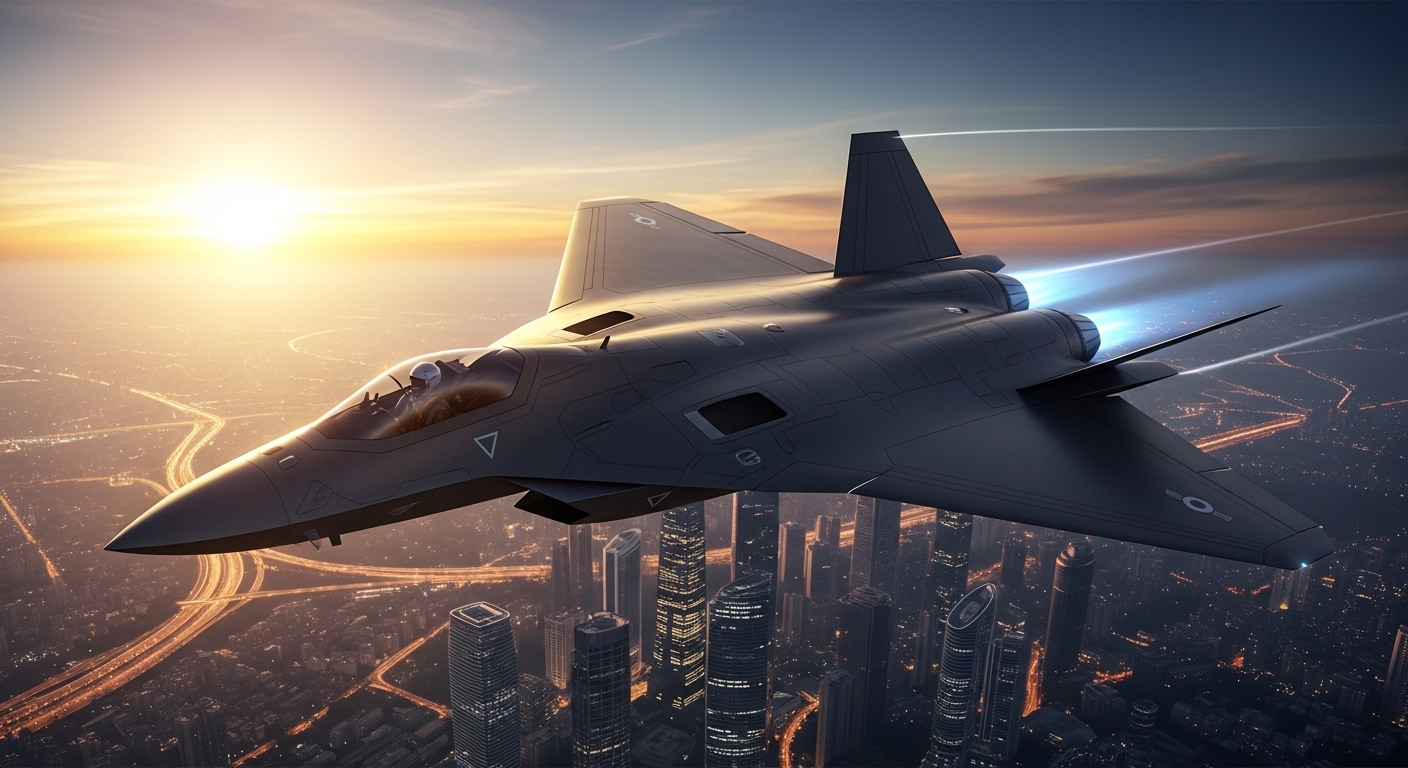
Just before sunrise at a remote airbase, engineers and pilots gather around a sleek prototype aircraft hidden inside a massive hangar. The aircraft’s surface appears almost seamless, its design lacking the familiar edges of older fighter jets. Nearby screens display streams of data—AI simulations, sensor networks, and drone coordination patterns. This is not simply another fighter aircraft. It represents the future of aerial warfare: the 6th generation fighter.
For decades, fighter jets have symbolized technological dominance in the skies. Each generation of aircraft has brought new capabilities, from radar systems to stealth technology. Now, as global powers race to shape the next era of military aviation, the 6th generation fighter is emerging as the most ambitious leap yet.
For entrepreneurs, technology enthusiasts, and innovators, these aircraft offer more than military significance. They represent cutting-edge developments in artificial intelligence, advanced materials, networked systems, and autonomous collaboration—technologies that may influence industries far beyond defense.
Understanding what defines a sixth-generation fighter reveals how engineering innovation is reshaping the future of aviation.
From Early Jets to the Sixth Generation
To appreciate the significance of the 6th generation fighter, it helps to look at how fighter aircraft have evolved over time.
The earliest jet fighters, introduced in the mid-20th century, prioritized speed and basic aerial combat capability. These first-generation aircraft were revolutionary at the time, replacing propeller-driven planes with powerful jet engines.
As technology advanced, later generations introduced radar systems, guided missiles, and improved maneuverability. By the fourth generation, aircraft such as the F-16 and Su-27 integrated advanced avionics and multi-role capabilities.
The fifth generation marked a dramatic shift with the introduction of stealth technology, sensor fusion, and advanced digital systems. Aircraft like the F-35 and F-22 became examples of how invisibility to radar and networked data could redefine combat strategy.
Now, the 6th generation fighter seeks to move even further beyond traditional aircraft concepts.
What Defines a 6th Generation Fighter
Unlike earlier generational shifts that focused on incremental improvements, the sixth generation represents a fundamental transformation in how fighter aircraft operate.
The defining characteristic of the 6th generation fighter is integration—bringing together multiple advanced technologies into a unified system that functions as part of a larger combat network.
These aircraft are expected to combine artificial intelligence, advanced sensors, directed energy weapons, and unmanned drone collaboration. Rather than acting alone, they will operate as command centers within a network of aerial systems.
This concept is often described as “system-of-systems” warfare, where a single aircraft coordinates multiple assets in real time.
Such capabilities dramatically expand the strategic possibilities for air operations.
Artificial Intelligence in Future Air Combat
Artificial intelligence will likely play a central role in the operation of the 6th generation fighter.
Modern fighter jets already rely on sophisticated software to manage radar, navigation, and weapons systems. However, the next generation will take this automation much further.
AI systems may assist pilots by analyzing massive amounts of sensor data instantly. Instead of manually interpreting information from multiple displays, pilots could receive real-time recommendations generated by onboard algorithms.
In some scenarios, AI might even control certain mission tasks autonomously.
For example, an aircraft could deploy and manage a group of unmanned drones, each performing reconnaissance or defensive roles while the pilot focuses on broader strategic decisions.
This human-machine collaboration represents one of the most exciting aspects of next-generation aviation.
The Concept of Loyal Wingman Drones
One of the most discussed features of the 6th generation fighter is its ability to operate alongside unmanned aircraft often referred to as “loyal wingman” drones.
These drones function as extensions of the primary aircraft. They may perform tasks such as surveillance, electronic warfare, or even defensive interception.
Because they are unmanned, these systems can take on higher-risk missions without endangering human pilots.
The manned fighter acts as a central hub, coordinating these autonomous or semi-autonomous aircraft through advanced communication systems.
This networked approach dramatically increases operational flexibility and mission effectiveness.
It also reflects a broader shift toward distributed systems in modern military technology.
Advanced Stealth and Sensor Systems
Stealth technology will remain an essential element of the 6th generation fighter, but future designs are expected to push the concept even further.
Traditional stealth focused on minimizing radar signatures. Future aircraft may incorporate adaptive surfaces and new materials that reduce visibility across multiple detection methods, including infrared and electronic surveillance.
Sensor technology will also evolve dramatically.
Instead of relying on a single radar system, sixth-generation aircraft may integrate multiple sensing technologies that operate simultaneously. These sensors could include radar, infrared detection, electronic intelligence systems, and even space-based data feeds.
Together, they create a comprehensive battlefield awareness environment where pilots can detect threats long before they become visible.
Key Technologies Behind Sixth-Generation Aircraft
| Technology | Role in the Aircraft | Strategic Advantage |
|---|---|---|
| Artificial Intelligence | Processes sensor data and assists decision-making | Faster tactical responses |
| Loyal Wingman Drones | Operate alongside the fighter for support missions | Expanded operational range |
| Advanced Stealth Materials | Reduce detection across multiple sensors | Greater survivability |
| Directed Energy Weapons | Potential use of laser-based defense systems | Precision and speed |
| Network-Centric Communication | Connects aircraft to satellites and other units | Real-time battlefield coordination |
These technologies highlight how the 6th generation fighter is evolving into something more than a traditional aircraft.
It becomes a highly intelligent node within a broader combat network.
Global Programs Developing Sixth-Generation Fighters
Several major defense programs around the world are currently working toward sixth-generation aircraft.
The United States has launched initiatives such as the Next Generation Air Dominance program, which focuses on developing advanced fighters capable of operating in highly contested environments.
European nations are collaborating on programs such as the Future Combat Air System, aiming to create a networked aviation ecosystem that includes manned fighters, drones, and advanced communication systems.
Other countries are also exploring their own next-generation designs, recognizing the strategic importance of maintaining technological leadership in air combat.
These international efforts demonstrate how the race to develop the 6th generation fighter has become a central aspect of modern defense innovation.
Engineering Challenges Behind the Technology
Designing a sixth-generation fighter involves extraordinary technical challenges.
Integrating artificial intelligence with pilot-controlled systems requires careful balancing of automation and human oversight. Engineers must ensure that AI assists decision-making without reducing pilot authority.
Energy management is another major challenge. Advanced sensors, electronic warfare systems, and potential laser weapons require significant power generation.
Engineers are therefore exploring next-generation propulsion systems capable of delivering both speed and energy efficiency.
Finally, the cost and complexity of these aircraft require careful planning. Governments and manufacturers must design platforms that remain adaptable for decades as technology evolves.
Why Entrepreneurs and Technologists Should Pay Attention
Although the 6th generation fighter belongs primarily to the defense sector, many of the technologies involved have broader applications.
Artificial intelligence developed for aircraft decision-making may influence autonomous vehicles and industrial automation.
Advanced materials designed for stealth could improve commercial aerospace manufacturing.
Networked communication systems developed for combat environments may inspire new approaches to cybersecurity and data sharing.
Historically, many innovations originating in defense research—such as GPS and the internet—have eventually transformed civilian industries.
The technologies driving sixth-generation aviation may follow a similar path.
The Future of Air Power
As military strategy continues evolving, the role of aircraft is changing as well.
Instead of focusing solely on speed or firepower, future air systems emphasize intelligence, coordination, and adaptability.
The 6th generation fighter embodies this philosophy. It represents a shift from individual aircraft dominance to networked air superiority.
Pilots will no longer operate isolated machines. Instead, they will command complex ecosystems of sensors, drones, and digital systems working together.
This transformation reflects a broader technological trend: the growing importance of interconnected systems capable of processing vast amounts of information in real time.
Conclusion: The Aircraft That Redefines the Sky
Back at the airbase, the prototype aircraft begins a quiet taxi toward the runway. Engineers watch carefully as it prepares for another test flight. What lifts into the sky moments later is more than just a jet.
It is a glimpse into the future of aviation.
The 6th generation fighter represents one of the most ambitious technological projects of the modern era. By combining artificial intelligence, autonomous systems, advanced materials, and networked communication, it reimagines what a fighter aircraft can be.
For technologists, entrepreneurs, and innovators, these developments offer a reminder that breakthroughs in one field often ripple across many others.
As these aircraft take shape in the coming decades, they may not only redefine air combat—they may also inspire the next generation of technological innovation.