
 By admin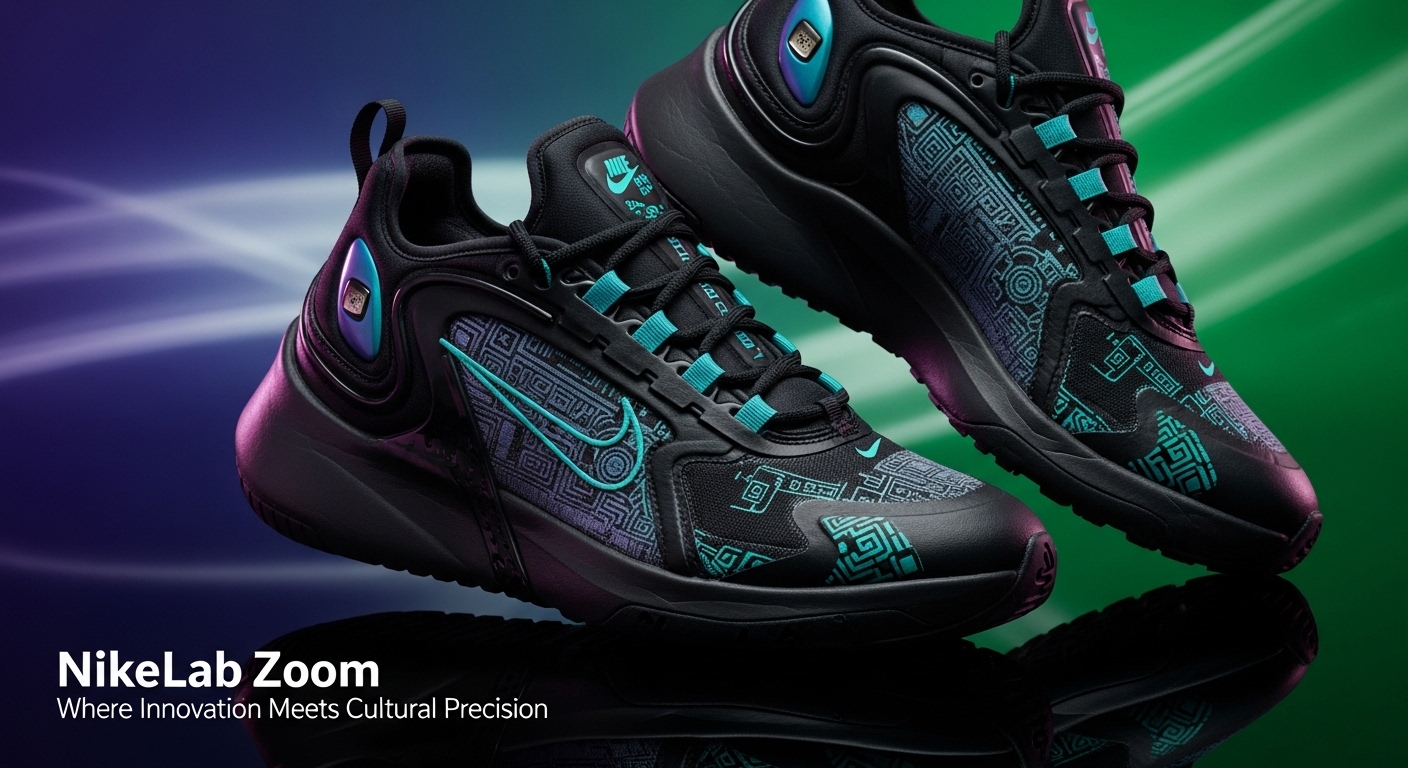
The line outside the boutique in SoHo didn’t look like a typical sneaker release. There were no loud banners, no oversized logos, no aggressive marketing. Just a quiet queue of people who knew exactly why they were there. Inside, the lighting was minimal, the presentation almost gallery-like. And at the center of it all sat a pair of NikeLab Zoom sneakers—clean, engineered, and quietly radical.
That moment captured something deeper than a product launch. It reflected a shift in how performance technology, design philosophy, and cultural awareness were converging. The phrase NikeLab Zoom isn’t just a product label—it represents a deliberate intersection of innovation and restraint, where engineering excellence meets curated storytelling.
The Evolution Behind NikeLab Zoom
To understand NikeLab Zoom, you have to start with Nike itself—a brand that has consistently operated at the intersection of sport, science, and culture. For decades, Nike’s innovation engine has been driven by a singular question: how can athletes move faster, more efficiently, and with less strain?
The answer led to the development of Nike Zoom Air, a cushioning system introduced in the 1990s. Unlike traditional foam-based midsoles, Zoom Air uses tightly stretched tensile fibers inside a pressurized air unit, creating a responsive, low-profile feel that returns energy with each step.
But performance alone wasn’t enough.
NikeLab emerged as a concept to reframe innovation—not just as functionality, but as experience. It became a platform where design, architecture, and storytelling could elevate technical products into cultural artifacts.
NikeLab Zoom sits squarely in that space.
What Makes NikeLab Zoom Different
At first glance, a NikeLab Zoom sneaker may seem understated. That’s intentional. The philosophy is rooted in precision rather than spectacle.
The materials are often elevated—premium textiles, engineered mesh, or refined leather. The color palettes lean toward minimalism: monochrome tones, muted contrasts, subtle textures. But beneath that simplicity lies a deeply engineered core.
Zoom Air technology provides responsiveness that appeals not just to athletes, but to urban professionals navigating fast-paced environments. Whether moving through airports, city streets, or co-working spaces, the experience remains consistent: lightweight, responsive, and efficient.
This duality—performance and lifestyle—is what defines NikeLab Zoom.
The Influence of Design Leadership
Much of NikeLab’s identity has been shaped by collaborations with visionary designers. One of the most influential figures in this space was Virgil Abloh, whose approach to design blurred the lines between streetwear, art, and architecture.
While not exclusively tied to NikeLab Zoom, Abloh’s philosophy—deconstruction, minimalism, and conceptual storytelling—resonates strongly within the NikeLab framework. His work demonstrated that sneakers could be both functional objects and cultural commentary.
NikeLab Zoom products often carry that same DNA: thoughtful, restrained, and layered with meaning.
Why NikeLab Zoom Resonates with Founders and Creators
For entrepreneurs and founders, the appeal of NikeLab Zoom goes beyond aesthetics. It reflects a mindset.
In business, especially in tech and startups, there’s a growing appreciation for products that prioritize clarity over noise. The most effective solutions are often the simplest on the surface, powered by sophisticated systems underneath.
NikeLab Zoom embodies that principle.
It doesn’t demand attention—it earns it.
This is particularly relevant in a world where personal branding plays a significant role in professional identity. What you wear becomes part of how you communicate your values. Choosing something like NikeLab Zoom signals a preference for innovation, precision, and intentionality.
Performance Meets Everyday Utility
One of the most compelling aspects of NikeLab Zoom is its adaptability. Unlike traditional performance footwear that feels confined to gyms or tracks, these sneakers transition seamlessly into daily life.
This versatility aligns with the realities of modern work. The boundaries between professional and personal spaces have blurred. Founders take calls while commuting. Designers sketch ideas in cafés. Investors move between meetings and travel hubs.
Footwear, in this context, needs to keep up.
Here’s a closer look at how NikeLab Zoom fits into different environments:
| Context | Role of NikeLab Zoom | Value Delivered |
|---|---|---|
| Startup Workdays | All-day comfort with minimal design | Reduces fatigue, maintains sharp look |
| Travel and Mobility | Lightweight, responsive cushioning | Enhances movement efficiency |
| Creative Workspaces | Design-forward aesthetic | Aligns with innovative environments |
| Casual Networking Events | Subtle statement piece | Signals taste without overstatement |
This balance between form and function is what gives NikeLab Zoom its staying power.
The Retail Experience: More Than a Purchase
NikeLab wasn’t just about products—it was about environments. Stores were designed to feel more like curated exhibitions than retail spaces. Locations in cities like New York City and Tokyo became destinations for those seeking a more intentional shopping experience.
This approach mirrored trends in the broader retail landscape, where consumers increasingly value storytelling and immersion over transactional interactions.
NikeLab Zoom benefited from this ecosystem. The way it was presented—minimalist displays, thoughtful lighting, curated collections—reinforced its identity as something more than just footwear.
Technology as a Quiet Differentiator
In an era where many brands emphasize visible tech—bulky soles, exaggerated forms—NikeLab Zoom takes a different route. Its innovation is often invisible.
That’s not a weakness. It’s a strategy.
The focus is on feel rather than flash. The responsiveness of Zoom Air isn’t always something you see—it’s something you experience over time. This subtlety aligns with how many successful products operate in the tech world: intuitive, efficient, and quietly powerful.
Think of it as the difference between showing and proving.
Cultural Relevance Without Overexposure
One of the risks with any design-driven product is oversaturation. Trends rise quickly—and fade just as fast. NikeLab Zoom has largely avoided this cycle by maintaining a level of scarcity and curation.
Unlike mass-market releases, NikeLab collections are often limited, carefully distributed, and contextually relevant. This approach preserves their cultural value while preventing fatigue.
It’s a lesson many startups can learn from: growth doesn’t always mean ubiquity. Sometimes, controlled expansion creates stronger long-term impact.
The Broader Impact on Sneaker Culture
NikeLab Zoom has played a subtle but important role in shaping modern sneaker culture. It helped shift the conversation from hype to design integrity, from logos to materials, from visibility to experience.
This influence can be seen across the industry. Competing brands have adopted more minimalist aesthetics, focused on storytelling, and invested in experiential retail.
In that sense, NikeLab Zoom isn’t just a product line—it’s part of a larger movement redefining what consumers expect from design and performance.
Conclusion: Precision as a Philosophy
NikeLab Zoom represents more than a fusion of technology and design. It reflects a broader shift toward intentionality—choosing quality over noise, depth over distraction, and experience over excess.
For founders, creators, and professionals navigating complex, fast-moving environments, that philosophy resonates deeply. It’s not about standing out for the sake of attention. It’s about being understood for the right reasons.
In a world saturated with options, clarity becomes a competitive advantage. NikeLab Zoom captures that clarity—quietly, precisely, and effectively.