
 By admin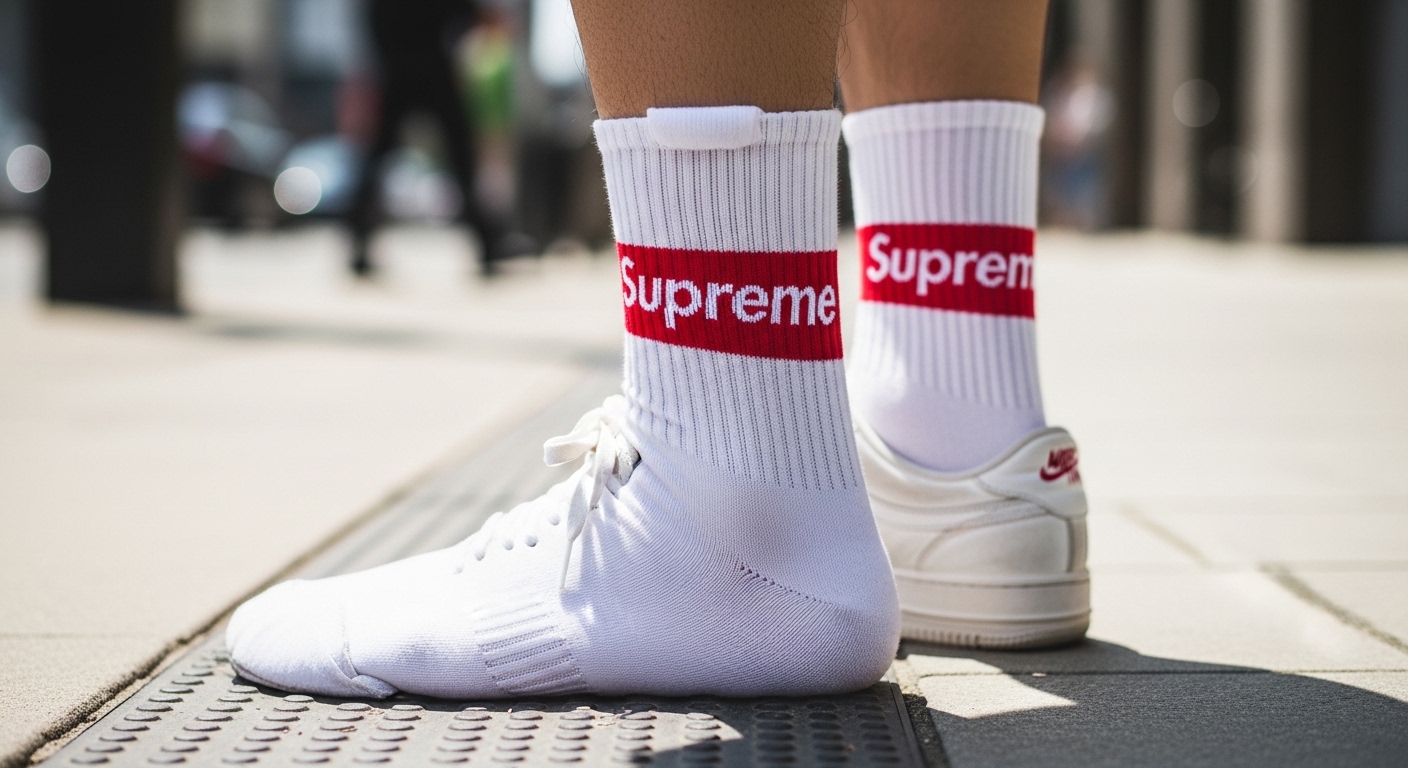
It was a quiet moment before a pitch meeting in downtown Manhattan. A founder adjusted his cuff, glanced down, and caught a flash of red just above his sneaker line. The logo was unmistakable—clean, boxed, deliberate. No one in the room commented on it directly, but later, over coffee, someone did say, “You’ve got an eye for detail.”
That’s the subtle influence of Supreme socks. They rarely dominate an outfit, but they don’t need to. In a world where attention is fragmented and impressions are formed quickly, small signals often carry disproportionate weight.
The Origins of Supreme’s Cultural Currency
To understand why something as simple as socks carries meaning, you have to start with Supreme. Founded in 1994 in New York, the brand wasn’t initially built on scale—it was built on scarcity and cultural alignment. Skateboarding, music, art, and counterculture all converged in its early identity.
Unlike traditional fashion houses, Supreme didn’t rely on seasonal collections alone. It introduced the concept of “drops”—limited releases that created urgency and exclusivity. Over time, even the smallest items in those drops, including socks, became part of a larger narrative.
This is where Supreme socks begin to matter. They’re not just accessories; they’re artifacts of a system that values timing, identity, and belonging.
Why Socks? The Power of Micro-Branding
At first glance, socks seem like an unlikely place for cultural significance. They’re often hidden, functional, and secondary to more visible pieces like jackets or sneakers.
But that’s precisely what makes them powerful.
In branding, there’s a concept often explored in behavioral economics: subtle cues can influence perception more effectively than overt signals. Supreme socks operate in that space. They don’t shout—they suggest.
A glimpse of a logo above a sneaker or beneath a tailored pant leg becomes a quiet indicator of taste, awareness, and participation in a broader cultural ecosystem.
For founders and professionals, this idea translates directly into personal branding. It’s not always the headline elements that define you—it’s the details.
Design Simplicity Meets Strategic Identity
Supreme socks are visually straightforward. Most feature the brand’s iconic red-and-white box logo, sometimes paired with minimal variations in color or typography. There’s no excessive patterning, no experimental silhouettes.
This restraint is intentional.
The simplicity allows the brand to maintain consistency across products while reinforcing recognition. It’s a principle many successful companies follow: reduce complexity to amplify clarity.
Compare this approach to how companies like Apple design their products. Minimalism isn’t about doing less—it’s about doing exactly what’s necessary, nothing more.
Supreme socks embody that philosophy in wearable form.
The Role of Scarcity and Demand
One of the defining characteristics of Supreme products is limited availability. Socks, despite being relatively accessible compared to outerwear or collaborations, are still part of this controlled distribution model.
This creates an interesting dynamic.
On one hand, socks are everyday items. On the other, Supreme transforms them into collectible pieces. The tension between utility and exclusivity is what drives demand.
Platforms like StockX and GOAT have further amplified this effect, allowing even basic items like socks to gain resale value.
For entrepreneurs, this offers a lesson in perceived value. It’s not always about the intrinsic worth of a product—it’s about the story, scarcity, and system around it.
Supreme Socks in Professional and Creative Spaces
You might not expect Supreme socks to appear in professional environments, but they do—just not in obvious ways.
In creative industries, they’re often worn as subtle statements. In startup culture, where dress codes are more fluid, they signal alignment with contemporary aesthetics and cultural awareness.
Even in more traditional settings, they can function as controlled expressions of individuality.
Here’s how they typically play out across different contexts:
| Environment | How Supreme Socks Are Used | Impression Created |
|---|---|---|
| Startup Offices | Paired with sneakers and casual wear | Creative, culturally aware |
| Creative Agencies | Styled with relaxed tailoring | Confident, detail-oriented |
| Tech Conferences | Visible with streetwear-inspired outfits | Modern, connected to trends |
| Corporate Settings | Subtle use under formal attire | Personal flair without disruption |
The key is integration. Supreme socks work best when they complement an overall look rather than dominate it.
Collaboration Culture and Extended Influence
Supreme’s influence extends far beyond its core products. Collaborations with artists, designers, and global brands have reinforced its position as a cultural bridge.
Figures like Takashi Murakami and partnerships with brands across industries have helped shape how even small items are perceived.
While socks may not always be the centerpiece of these collaborations, they benefit from the halo effect. Being part of the Supreme ecosystem means inheriting its cultural capital.
This is similar to how startups benefit from strong partnerships. Alignment with the right collaborators can elevate perception far beyond the core offering.
The Psychology of Everyday Luxury
There’s a growing trend toward what could be described as “accessible luxury”—items that offer a sense of exclusivity without requiring significant investment.
Supreme socks fit neatly into this category.
They allow individuals to participate in a premium cultural narrative without the barrier of high cost. This democratization of identity is particularly relevant for younger professionals and founders who are building their presence.
From a psychological standpoint, owning and wearing such items can reinforce a sense of belonging and confidence—subtle, but impactful.
Lessons for Founders and Brand Builders
Supreme socks might seem like a niche topic, but they illustrate broader principles that apply across industries.
First, consistency matters. A simple, recognizable design can carry more weight than constant reinvention.
Second, scarcity drives engagement. Controlled availability creates anticipation and value.
Third, context amplifies meaning. The same product can feel entirely different depending on how and where it’s presented.
These lessons are directly applicable to product development, marketing, and brand strategy. Whether you’re building software, launching a service, or creating physical goods, the fundamentals remain the same.
Beyond Fashion: A Symbol of Intentional Detail
What makes Supreme socks enduring isn’t just branding—it’s intentionality. Every element, from design to distribution, is considered.
In a professional context, this translates into how individuals approach their work and presentation. Paying attention to small details—whether in design, communication, or personal style—can create a cumulative effect that sets you apart.
It’s not about excess. It’s about precision.
Conclusion: Small Signals, Big Impact
Supreme socks are a reminder that influence doesn’t always come from the most visible elements. Sometimes, it’s the smallest details that leave the strongest impressions.
For entrepreneurs, creatives, and professionals navigating competitive environments, this insight is valuable. Success often lies in the ability to balance visibility with subtlety, innovation with consistency.
In the end, Supreme socks are more than just an accessory. They’re a case study in how thoughtful design, cultural awareness, and strategic restraint can transform even the simplest product into a lasting symbol.