
 By admin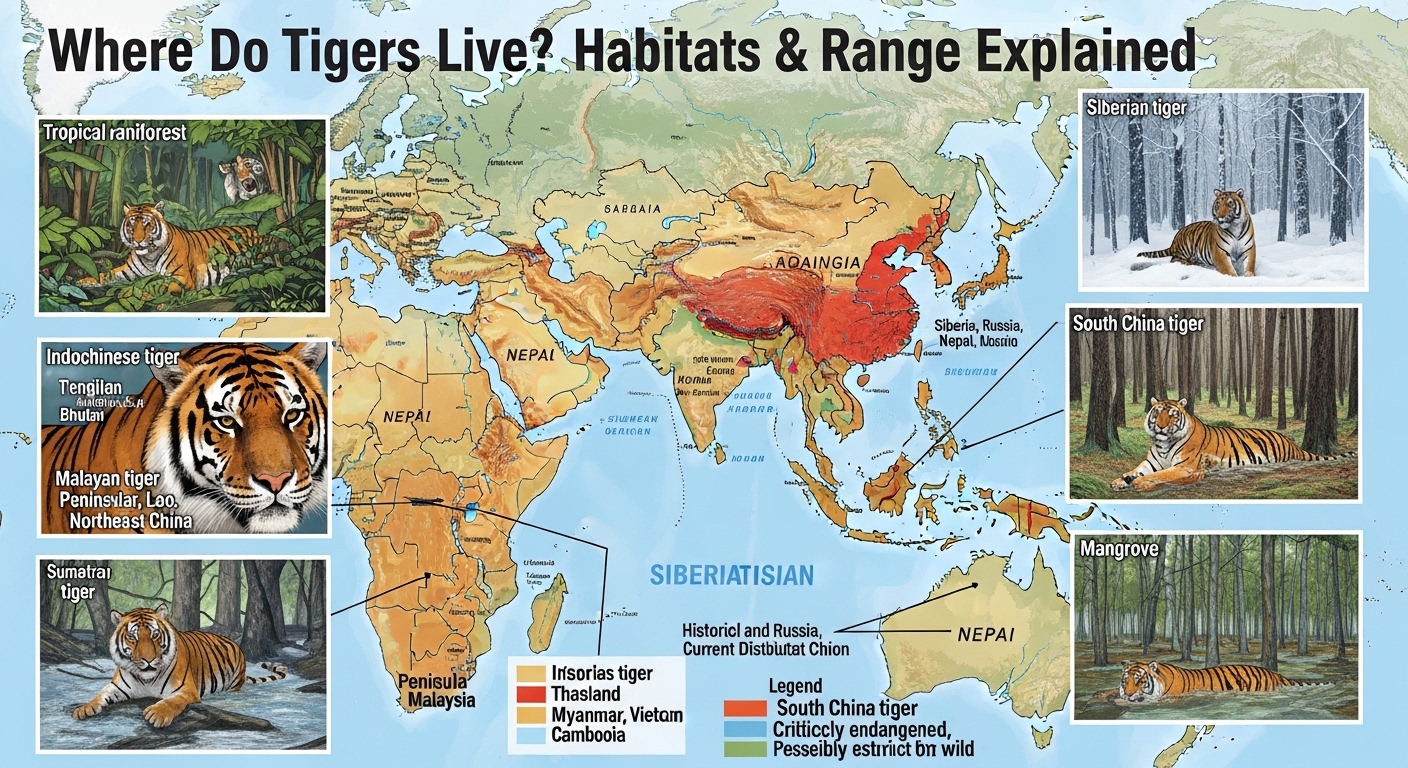
Tigers are among the most majestic and powerful creatures on our planet. These magnificent big cats embody strength, grace, and beauty in every stride they take. But beyond their striking appearance lies an essential role they play in maintaining the delicate balance of ecosystems where they roam. As apex predators, tigers help regulate prey populations and maintain biodiversity.
Yet, as human activity encroaches upon their territories, understanding where tigers live is more crucial than ever. From dense jungles to open grasslands, these incredible animals inhabit a variety of environments across Asia. Exploring their habitats not only highlights their importance but also sheds light on the urgent need for conservation efforts to protect them from extinction.
Join us as we delve into the world of tigers—their diverse habitats, how various species thrive in different regions, and what we can do to ensure these iconic cats continue to roam our planet for generations to come.
The Diverse Habitats of Tigers
Tigers are incredibly adaptable creatures, thriving in a variety of habitats. They primarily inhabit dense forests, grasslands, and scrublands. These areas provide ample cover for stalking prey.
In the tropical rainforests of Southeast Asia, tigers find lush vegetation that aids their hunting strategies. The towering trees create a perfect environment for ambush.
Conversely, Bengal tigers roam the expansive mangroves of Sundarbans. This unique habitat offers both land and water avenues to chase down fish and deer.
Some Siberian tigers call cold boreal forests home. Here, they endure harsh winters but benefit from vast territories filled with prey like roe deer and wild boar.
Each habitat supports different tiger populations by offering distinct resources needed for survival. Understanding these environments sheds light on why conservation efforts must be tailored to protect diverse ecosystems where these majestic animals thrive.
The Different Species of Tigers and Where They are Found
Tigers are magnificent creatures, and their species vary greatly across the globe. The most well-known is the Bengal tiger, primarily found in India but also inhabiting parts of Bangladesh, Nepal, and Bhutan.
Then there’s the Indochinese tiger. This subspecies roams through Southeast Asia, thriving in countries like Thailand, Vietnam, and Myanmar. Its darker coat helps it blend into dense forests.
The Siberian tiger stands apart as one of the largest. It mainly resides in Russia’s Far East and some areas of China’s northeastern regions. These tigers endure harsh winters with thick fur that keeps them warm.
Sumatran tigers are unique to Indonesia’s Sumatra Island. They adapt well to rainforests and have a distinct smaller size compared to other species.
We have the South China tiger—critically endangered—and its historical range includes southern China’s provinces. Conservation efforts aim to save this elusive subspecies from extinction.
Factors Affecting Tiger Populations and Habitat Range
Tigers face a myriad of challenges that impact their populations and habitats. One significant factor is habitat loss due to deforestation, agriculture, and urbanization. As human activities encroach on wild spaces, tigers are left with fewer areas to roam.
Poaching poses another severe threat. The illegal wildlife trade targets tigers for their beautiful pelts and various body parts believed to have medicinal properties. This not only reduces their numbers but also disrupts the delicate balance of ecosystems.
Climate change further complicates matters by altering habitats and prey availability. Rising temperatures can lead to droughts or flooding, diminishing suitable environments for tigers.
Moreover, human-wildlife conflict often arises when tigers venture into agricultural lands searching for food. Farmers may retaliate against these majestic animals, exacerbating population declines in certain regions. Each of these factors intertwines, making tiger conservation an urgent necessity across the globe.
Efforts for Tiger Conservation and Protecting Their Habitats
Tiger conservation efforts are gaining momentum across the globe. Various organizations and governments are collaborating to create protected areas that serve as sanctuaries for these majestic creatures.
Anti-poaching initiatives play a crucial role in this fight. Armed rangers patrol national parks, ensuring that poachers stay at bay. Education campaigns also aim to raise awareness about the significance of tigers in ecosystems.
Habitat restoration projects focus on reforesting regions where tigers once thrived. By rebuilding their natural environments, we enhance their chances of survival.
Community involvement is vital too. Engaging local populations fosters coexistence and encourages sustainable practices that benefit both people and wildlife.
Technology aids these efforts significantly. Camera traps help monitor tiger populations while satellite imagery tracks habitat changes, informing conservation strategies effectively.
Human-Tiger Conflict and Its Impact on Tiger Habitats
Human-tiger conflict is a growing concern in areas where their habitats overlap. As human populations expand, encroachment into tiger territories increases. This leads to competition for resources like food and land.
Farmers often face the threat of tigers preying on livestock. In retaliation, they may resort to killing these majestic animals to protect their livelihoods. Such actions not only endanger tiger populations but also disturb the delicate balance of ecosystems.
When tigers lose their natural prey due to hunting or habitat destruction, they venture closer to human settlements in search of food. This behavior escalates encounters between humans and tigers, heightening tensions on both sides.
As cities grow and agricultural activities spread, forests are fragmented and degraded. These changes diminish available habitats for tigers, making survival even more challenging for them while increasing human-wildlife conflicts.
What We Can Do to Help Preserve Tiger Habitats?
Preserving tiger habitats requires collective action. One effective way to contribute is by supporting organizations dedicated to wildlife conservation. Donations can help fund anti-poaching initiatives and habitat restoration projects.
Awareness plays a crucial role. Educating others about the importance of tigers in our ecosystem can inspire more people to take action. Share information on social media or participate in local events focused on biodiversity.
Reducing your ecological footprint also makes a difference. Simple actions like reducing plastic use, conserving water, and opting for sustainable products help protect natural environments where tigers thrive.
Advocacy is key too. Contact lawmakers to support policies that protect wildlife habitats and promote responsible land management practices. Every voice counts in the fight against habitat destruction.
Consider eco-tourism as an option when traveling. Visiting protected areas responsibly helps generate income for local communities while ensuring that tiger habitats remain intact and safeguarded for future generations.
Conclusion: The Importance of Protecting Tiger Habitats
Tigers play a critical role in maintaining the balance of their ecosystems. As apex predators, they help regulate prey populations and support biodiversity. Protecting tiger habitats is not just about saving these magnificent creatures; it’s also about preserving the intricate web of life in which they thrive.
The loss of habitat due to deforestation, urbanization, and human activities poses a severe threat to tiger populations worldwide. Safeguarding their environments ensures that future generations can experience the beauty and majesty of tigers in the wild.
Conservation initiatives are already making strides toward restoring habitats and mitigating human-tiger conflict. Community engagement is essential for creating sustainable solutions that benefit both people and wildlife.
Protecting tiger habitats requires collective effort from governments, organizations, and individuals alike. By raising awareness and supporting conservation efforts, we can contribute to securing a future where tigers roam freely in their natural homes—an invaluable treasure for our planet’s health and diversity.