
 By admin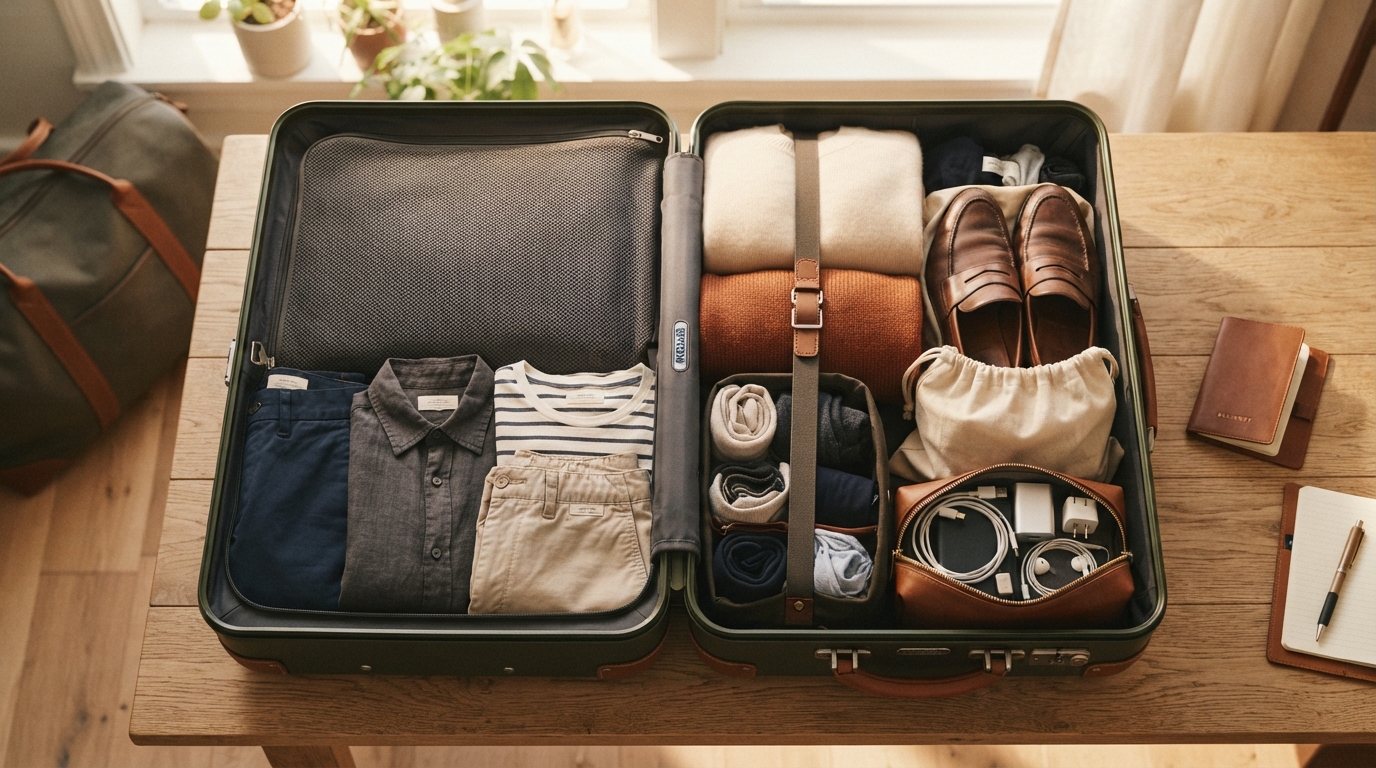
Why Efficient Packing Matters More Than Ever
Modern travel comes with tighter airline restrictions, busy airports, and increasingly mobile lifestyles. Travelers frequently move between hotels, airports, trains, and meeting rooms. Every unnecessary kilogram becomes more noticeable after carrying luggage through terminals or lifting it into overhead compartments.
Packing efficiently also makes unpacking simpler. Instead of digging through layers of clothing searching for one shirt, everything has its place. The result is less frustration and more time enjoying your destination.
Experienced travelers understand that the goal isn’t to bring everything you own. It’s to bring everything you’ll actually use.
Start with a Plan Before Opening Your Suitcase
The biggest packing mistake usually happens before a single item enters the bag.
Rather than immediately collecting clothes, begin by understanding your trip. Consider how many days you’ll be away, what activities you’ll participate in, the expected weather, and whether laundry facilities will be available.
Someone attending a conference needs a different wardrobe than someone backpacking through national parks. Likewise, a beach vacation requires fewer bulky items than a winter holiday.
Creating a simple checklist helps prevent forgotten essentials while reducing unnecessary extras. It also minimizes the temptation to throw random items into your luggage at the last minute.
Choose Clothing That Works Together
One of the simplest ways to maximize suitcase space is by building a wardrobe around versatile pieces.
Neutral-colored clothing allows multiple outfit combinations without requiring additional garments. A pair of dark trousers, for example, can work equally well with casual shirts during the day and a smarter top in the evening.
Instead of packing an outfit for every possible occasion, think in terms of interchangeable pieces. This approach dramatically reduces the number of items while maintaining plenty of variety.
Lightweight fabrics that resist wrinkles provide another advantage. They occupy less space and usually emerge from the suitcase looking presentable.
Roll or Fold? Understanding What Works Best
Travelers have debated rolling versus folding for years, but the truth is that each method has its strengths.
Rolling works exceptionally well for T-shirts, jeans, workout clothes, and casual wear. Rolled clothing often occupies less space while making individual items easier to locate.
Structured garments such as blazers, dress shirts, or formal trousers generally benefit from careful folding to reduce creasing.
Many experienced travelers combine both techniques rather than relying on only one. Rolling casual clothing while folding delicate or structured garments creates an efficient balance between space and appearance.
Packing Cubes: Small Tools with Big Benefits
Packing cubes have become popular because they solve one of travel’s biggest challenges: organization.
Instead of one large compartment filled with loose clothing, cubes divide your suitcase into clearly defined sections. Shirts remain separate from trousers, undergarments stay together, and dirty laundry can be isolated from clean clothing.
Beyond organization, compression cubes can help reduce bulk, making better use of available suitcase space without creating chaos.
Make Every Inch Count
Efficient packing involves using spaces that many travelers overlook.
Shoes, for example, don’t need to remain empty. Socks, belts, charging cables, sunglasses, or small accessories can be placed inside them.
The corners of a suitcase often accommodate compact items like travel adapters or rolled scarves. Flat objects such as notebooks can fit neatly against the suitcase walls.
These small adjustments collectively create significant additional space without increasing the size of your luggage.
Toiletries Require Strategy
Large bottles consume valuable room and often exceed airline liquid restrictions.
Travel-sized containers or refillable bottles provide enough product for most trips while reducing weight considerably. Leak-proof containers also protect clothing from unpleasant surprises during transit.
Keeping toiletries together inside a waterproof pouch ensures that even if something spills, the damage remains contained.
Whenever your accommodation provides shampoo, conditioner, or soap, consider leaving those items at home altogether.
Electronics Deserve Their Own Space
Modern travelers rarely leave home without multiple electronic devices.
Phones, tablets, laptops, chargers, power banks, headphones, adapters, and cables quickly become tangled unless properly organized.
Using a dedicated electronics organizer keeps accessories together while making airport security checks faster. Wrapping cables individually also prevents knots and extends their lifespan.
Whenever possible, pack expensive electronics in your carry-on rather than checked luggage for added protection.
Weight Distribution Makes a Difference
A suitcase isn’t just about fitting items inside—it’s also about balance.
Heavier objects such as shoes, toiletry bags, or electronics should sit near the wheels of upright luggage. This positioning improves stability and makes rolling the suitcase noticeably easier.
Lighter clothing can fill the upper sections, helping prevent unnecessary strain when lifting or maneuvering your bag.
Balanced luggage also reduces the likelihood of contents shifting during transport.
A Quick Packing Priority Guide
| Category | Recommended Approach | Why It Helps |
|---|---|---|
| Clothing | Pack versatile, mix-and-match items | Fewer clothes create more outfit options |
| Shoes | Limit to two or three pairs | Saves space and reduces weight |
| Toiletries | Use travel-sized containers | Meets airline rules and minimizes bulk |
| Electronics | Store in a dedicated organizer | Easier access and less cable clutter |
| Documents | Keep in an accessible pocket | Faster check-ins and security screening |
| Accessories | Use empty shoe space | Maximizes every available inch |
Leave Room for the Unexpected
One hallmark of experienced travelers is that they rarely fill a suitcase to its absolute capacity.
Leaving around fifteen to twenty percent of the space empty allows room for souvenirs, shopping, or unexpected items acquired during the trip.
A completely full suitcase is often difficult to repack after the return journey, especially if items are no longer folded as neatly.
That extra space provides flexibility that many travelers appreciate before the trip is over.
Avoid the “Just in Case” Trap
One of the biggest reasons luggage becomes unnecessarily heavy is emotional packing.
People often bring clothing they never wear, duplicate toiletries, extra shoes, and multiple backup items because they imagine unlikely scenarios.
Ask a simple question before packing each item: “How likely am I to use this?”
If the answer is uncertain, it probably doesn’t belong in your suitcase.
The most efficient travelers trust that essentials can usually be purchased if genuinely needed.
Prepare for Airport Security
Efficient packing isn’t only about fitting everything inside your suitcase. It’s also about moving smoothly through airports.
Liquids should be easily accessible if security requires inspection. Laptops and tablets should be placed where they can be removed quickly. Travel documents, passports, boarding passes, and identification should remain within easy reach rather than buried beneath clothing.
A suitcase designed for convenience speeds up every stage of the journey.
Think Beyond the Destination
Packing efficiently also means preparing for the trip home.
Dirty clothes can be separated using a lightweight laundry bag. Fragile souvenirs should have protected space. Chargers should return to the same organizer where they began the journey, reducing the chance of leaving them behind in hotel rooms.
Thinking ahead creates a smoother return experience and reduces last-minute stress.
Build Your Own Packing Routine
Frequent travelers often develop a repeatable system.
They keep a permanent travel toiletry kit ready to go. Chargers remain stored in dedicated organizers. Packing lists evolve after each trip, becoming increasingly refined.
Eventually, packing becomes less of a stressful event and more of a predictable routine that takes minutes instead of hours.
This consistency is perhaps the greatest efficiency of all.
Conclusion
Mastering how to pack a suitcase efficiently isn’t about squeezing impossible amounts into limited space—it’s about traveling with intention. Every carefully chosen item contributes to a lighter, more organized, and more enjoyable journey. Smart packing reduces stress before departure, simplifies daily life while traveling, and makes returning home considerably easier.
The best travelers aren’t necessarily those with the biggest suitcases or the most expensive luggage. They’re the ones who understand that every journey begins long before reaching the airport. A thoughtfully packed suitcase reflects thoughtful travel itself: practical, flexible, and ready for whatever the destination has to offer.