
 By admin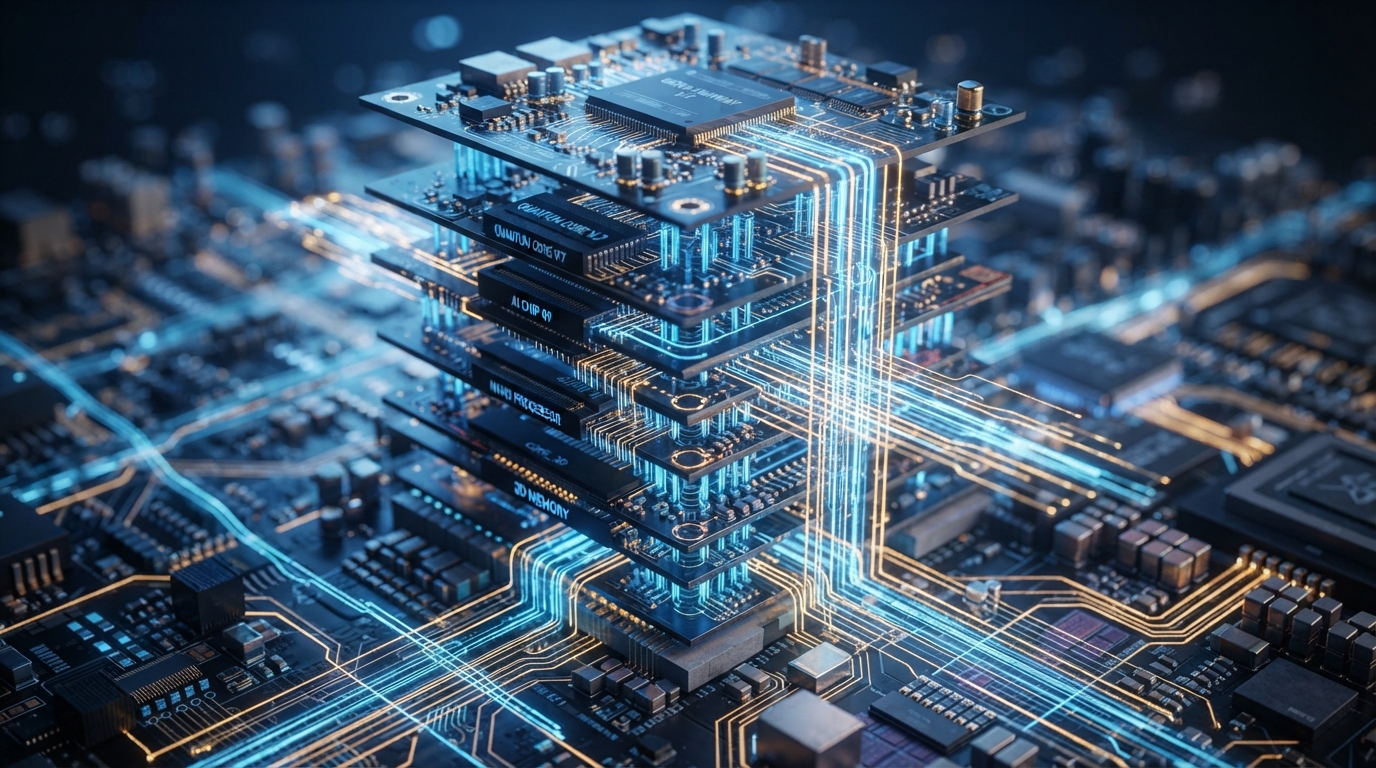
A few decades ago, the idea of carrying a computer in your pocket sounded like science fiction. Today, smartphones perform billions of calculations every day, smartwatches monitor our health in real time, and electric vehicles process enormous amounts of data while traveling at highway speeds. As these devices become increasingly powerful, engineers face an ongoing challenge: how do you fit more computing capability into less space without compromising speed, efficiency, or reliability?
The answer lies in 3D electronic technology, an innovation that is redefining how modern electronics are designed and manufactured. Rather than expanding outward across flat circuit boards, engineers are building upward by stacking components, embedding circuits, and creating three-dimensional electronic architectures. This approach delivers higher performance, reduced energy consumption, and compact designs that were once impossible to achieve.
The rise of 3D electronic systems is more than a manufacturing breakthrough. It represents a fundamental shift in the electronics industry, enabling smarter products, faster processors, and new possibilities across healthcare, automotive engineering, aerospace, telecommunications, and consumer technology. As industries continue to demand smaller yet more capable devices, three-dimensional electronics are becoming one of the most important innovations shaping the future of technology.
Understanding 3D Electronic Technology
The term 3D electronic refers to electronic systems that use three-dimensional structures instead of traditional two-dimensional layouts. Conventional electronics typically place components side by side on a printed circuit board. While this approach has served the industry well for decades, it eventually reaches physical limitations as manufacturers attempt to make products smaller while increasing performance.
Three-dimensional electronics overcome these limitations by utilizing vertical space. Components are stacked in multiple layers, interconnected through microscopic electrical pathways, and sometimes even embedded within structural materials. Instead of spreading circuits across larger surfaces, engineers create compact systems that maximize every available millimeter.
This design philosophy not only saves space but also shortens the distance electrical signals must travel. The result is faster communication between components, improved processing speeds, and greater overall efficiency.
Why the Industry Is Embracing 3D Electronic Design
For many years, improvements in computing power relied primarily on shrinking transistors. As manufacturing technology advanced, more transistors could fit onto individual chips, allowing processors to become increasingly powerful.
However, physical and engineering limitations have made further miniaturization increasingly complex and expensive. Rather than relying solely on smaller components, manufacturers have turned to three-dimensional integration as a practical way to continue improving performance.
By stacking memory, processors, and specialized circuits vertically, engineers reduce communication delays while increasing computing density. This strategy enables manufacturers to create devices that deliver significantly greater capabilities without increasing their physical size.
Consumers experience these benefits every day through faster smartphones, more responsive laptops, improved gaming systems, and increasingly sophisticated wearable devices.
How 3D Electronic Systems Work
At the heart of every 3D electronic system is the principle of vertical integration.
Instead of mounting every component on a single flat board, manufacturers organize electronic elements into multiple interconnected layers. These layers communicate through tiny vertical electrical connections known as Through-Silicon Vias (TSVs), microbumps, or other advanced interconnect technologies.
Electrical signals move directly between stacked layers rather than traveling long horizontal distances across circuit boards. This significantly improves speed while reducing latency and energy consumption.
Many modern designs also incorporate advanced packaging methods that combine processors, memory modules, sensors, and communication chips into highly compact assemblies. In some applications, additive manufacturing techniques make it possible to print conductive materials directly onto three-dimensional surfaces, opening entirely new possibilities for customized electronic products.
Core Technologies Behind 3D Electronic Manufacturing
Several complementary technologies work together to make three-dimensional electronics possible.
| Technology | Primary Function | Key Benefit |
|---|---|---|
| 3D Integrated Circuits (3D ICs) | Stack semiconductor chips vertically | Increased computing performance |
| Through-Silicon Vias (TSVs) | Create vertical electrical connections | Faster communication between layers |
| Advanced Chip Packaging | Integrate multiple chips into compact modules | Smaller, more efficient devices |
| 3D Printed Electronics | Print conductive circuits layer by layer | Flexible product design and rapid prototyping |
| Embedded Components | Place electronic parts inside circuit boards | Reduced size and improved reliability |
These technologies collectively allow manufacturers to overcome many of the limitations associated with conventional electronic design.
Applications Across Modern Industries
The influence of 3D electronic technology extends far beyond consumer gadgets. It has become a critical enabler across multiple industries where performance, reliability, and miniaturization are essential.
Consumer electronics remain one of the largest beneficiaries. Smartphones now incorporate stacked memory chips, advanced processors, image sensors, wireless communication modules, and artificial intelligence accelerators within remarkably compact spaces. These innovations allow manufacturers to improve performance while maintaining slim product designs.
The healthcare sector increasingly relies on three-dimensional electronics for medical imaging systems, implantable devices, wearable health monitors, and portable diagnostic equipment. Smaller electronic systems improve patient comfort while enabling more sophisticated monitoring capabilities.
In automotive engineering, electric vehicles and autonomous driving systems require enormous computing power to process information from cameras, radar, lidar, and numerous onboard sensors. Three-dimensional electronic architectures help manufacturers deliver this capability within the limited space available inside modern vehicles.
Aerospace companies also benefit from compact electronic systems that reduce weight while maintaining exceptional reliability under demanding operating conditions. Every gram saved contributes to improved fuel efficiency and mission performance.
Industrial automation, robotics, telecommunications, and defense technologies similarly depend on increasingly advanced electronic integration.
The Advantages of 3D Electronic Technology
The growing popularity of 3D electronic systems stems from several significant advantages.
Perhaps the most important benefit is improved performance. By shortening the distance between components, electrical signals travel more efficiently, reducing latency and increasing processing speed.
Miniaturization is equally valuable. Manufacturers can integrate greater functionality into smaller devices without sacrificing performance. This allows smartphones to become more capable, wearable devices to include additional sensors, and industrial systems to operate within increasingly compact enclosures.
Energy efficiency also improves because shorter signal pathways consume less power. Reduced energy requirements translate into longer battery life for portable electronics and lower operating costs for larger computing systems.
Reliability often benefits as well. Improved integration minimizes external connections, reducing potential failure points while enhancing overall system durability.
Finally, design flexibility expands considerably. Three-dimensional manufacturing techniques enable engineers to create customized shapes and integrate electronics into products that would be difficult or impossible using conventional circuit board technology.
Challenges That Still Need Solutions
Despite its many advantages, 3D electronic manufacturing presents several engineering challenges.
Heat management remains one of the most significant obstacles. As components are packed more closely together, removing excess heat becomes increasingly difficult. Engineers continue developing advanced cooling systems, thermal materials, and optimized chip layouts to address this issue.
Manufacturing complexity also increases substantially. Producing multilayer electronic systems requires exceptional precision, specialized fabrication equipment, and rigorous quality control procedures.
Testing and repair become more complicated because internal components are less accessible than those mounted on traditional circuit boards.
Cost is another important consideration. Although prices continue to decline as manufacturing techniques mature, advanced three-dimensional electronics remain more expensive than many conventional alternatives.
Fortunately, ongoing research continues to improve manufacturing efficiency while reducing production costs.
The Growing Role of 3D Printing in Electronics
One of the most exciting developments within the field is the emergence of additive manufacturing.
Instead of etching circuits from flat materials, specialized printers deposit conductive inks, polymers, and insulating materials layer by layer to create functional electronic structures.
This process allows manufacturers to produce customized circuits rapidly while reducing material waste. Engineers can prototype new designs quickly, accelerate product development, and manufacture highly specialized electronic components with minimal tooling.
Flexible sensors, smart packaging, wearable devices, Internet of Things products, and biomedical equipment increasingly benefit from these advanced manufacturing techniques.
As printable electronic materials continue to improve, additive manufacturing is expected to become an even more important part of future electronic production.
The Future of 3D Electronic Innovation
The evolution of three-dimensional electronics shows no signs of slowing.
Artificial intelligence applications require increasingly powerful processors capable of handling enormous volumes of data. High-performance computing systems rely on stacked memory architectures to maximize speed while minimizing power consumption.
Researchers are also exploring flexible electronics, stretchable circuits, biodegradable electronic materials, and advanced semiconductor packaging techniques that could reshape multiple industries.
Emerging technologies such as quantum computing, next-generation wireless communication, and intelligent robotics will likely depend heavily on continued advances in three-dimensional electronic integration.
At the same time, sustainability is becoming an important design consideration. Manufacturers are seeking ways to reduce material consumption, improve energy efficiency, and minimize electronic waste throughout the product lifecycle.
These innovations suggest that 3D electronic technology will play an increasingly central role in the digital economy.
Conclusion
The evolution of 3D electronic technology represents one of the most significant advancements in modern engineering. By moving beyond the limitations of traditional flat circuit boards, manufacturers can create smaller, faster, and more efficient electronic systems that support the growing demands of today’s connected world.
From smartphones and wearable devices to autonomous vehicles, medical equipment, and industrial automation, three-dimensional electronics have become an essential foundation for innovation. While challenges such as thermal management and manufacturing complexity remain, continuous research is making these systems more practical, affordable, and reliable.
As the need for greater computing power continues to grow, 3D electronic technology will not simply support the future of electronics—it will help define it. The transition from two-dimensional to three-dimensional design is more than a technological evolution; it is a transformation that is reshaping how the world builds, uses, and benefits from intelligent electronic systems.