
 By admin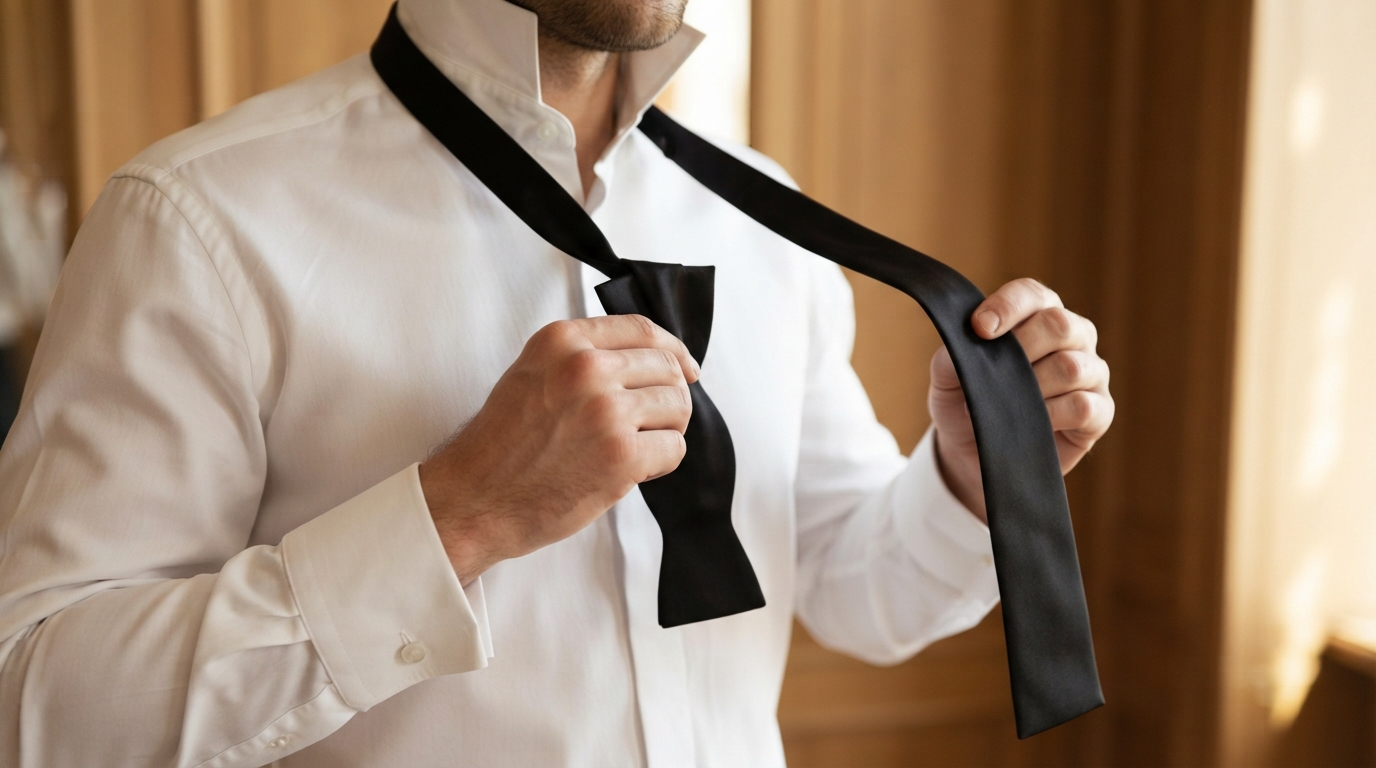
The invitation arrives with just a few words that instantly change your wardrobe plans: Black Tie Required. Suddenly, the excitement of the upcoming wedding, gala, or formal dinner is accompanied by one lingering question. The tuxedo is ready, the shoes are polished, but the bow tie sitting neatly in its box seems surprisingly intimidating.
Many people reach for a pre-tied bow tie to avoid the challenge, but there is something uniquely satisfying about mastering the real thing. Learning how to tie a bow tie is more than acquiring a practical skill—it is embracing a tradition of craftsmanship, confidence, and personal style. A self-tied bow tie carries a subtle character that machine-made versions simply cannot replicate. Its slight imperfections give it authenticity, reflecting the individual wearing it.
While the process may seem complicated at first glance, tying a bow tie becomes remarkably straightforward with patience and practice. Like tying shoelaces or fastening a necktie, repetition transforms uncertainty into confidence. Once mastered, it becomes a skill you’ll carry for life.
Why the Self-Tied Bow Tie Still Matters
Fashion trends come and go, but certain accessories remain timeless because they represent elegance rather than novelty.
The self-tied bow tie has long been associated with formal occasions, academic tradition, artistic expression, and refined style. Unlike pre-tied versions, each hand-tied bow develops its own personality. The slight asymmetry that naturally occurs is often viewed as a mark of authenticity rather than imperfection.
Beyond aesthetics, knowing how to tie your own bow tie demonstrates attention to detail and confidence. It signals that you’re comfortable with classic style rather than relying on convenience.
Whether attending a wedding, awards ceremony, charity event, or formal celebration, a properly tied bow tie contributes to an appearance that feels polished without appearing overly manufactured.
Understanding the Anatomy of a Bow Tie
Before learning how to tie a bow tie, it helps to understand the accessory itself.
Most traditional bow ties are adjustable to accommodate different neck sizes. Each end widens into a butterfly or diamond shape that ultimately forms the finished bow.
Unlike standard neckties, bow ties depend on balanced loops rather than long hanging ends. This makes symmetry especially important during the tying process.
Fabric choice also influences the final appearance. Silk creates a classic formal look with subtle sheen, while cotton, linen, velvet, and wool offer more casual or seasonal alternatives.
Selecting the correct neck size before tying ensures both comfort and a balanced finished knot.
Preparing Before You Begin
Success often starts before the first fold.
Adjust the bow tie so it matches your shirt collar size. Most adjustable bow ties include marked measurements that correspond to neck circumference.
Raise your shirt collar to create additional working space around your neck.
Standing in front of a mirror provides the clearest view during practice, although experienced wearers often tie bow ties entirely by touch.
Take a few moments to relax. Many beginners struggle simply because they rush the process. Slow, deliberate movements typically produce much better results.
How to Tie a Bow Tie Step by Step
Learning how to tie a bow tie becomes much easier when each stage builds naturally upon the previous one.
Begin by placing the bow tie around your neck with one end hanging slightly longer than the other.
Cross the longer end over the shorter end near your collar, creating a simple “X” shape. Pull the longer end underneath and tighten gently, much like the first step of tying a shoelace.
Next, fold the shorter end horizontally to create the front portion of the bow. Hold this folded section firmly against your collar.
Allow the longer end to hang directly over the folded bow.
Now fold the hanging section backward at its widest point to form the second half of the bow.
A small loop naturally forms behind the front bow. Carefully push the folded back section through this opening.
Once both sides emerge, gently pull the loops outward while adjusting the folds until the bow becomes balanced.
Rather than tightening aggressively, make small adjustments to each side until the knot sits comfortably and symmetrically beneath your collar.
The process may require several attempts initially, but each repetition builds confidence.
Common Bow Tie Styles
Although the tying method remains largely the same, different bow tie shapes create distinct visual impressions.
| Bow Tie Style | Best For | Appearance |
|---|---|---|
| Butterfly | Black tie events, weddings | Classic, full-sized bow |
| Batwing | Modern business and formal wear | Slim, understated profile |
| Diamond Point | Fashion-forward occasions | Slightly asymmetrical elegance |
| Rounded Club | Vintage-inspired outfits | Soft, traditional curves |
| Large Butterfly | Tall individuals or broad lapels | Bold, dramatic appearance |
Choosing the appropriate style depends on both personal preference and the formality of the occasion.
Common Mistakes Beginners Make
Even experienced dressers occasionally struggle when tying a bow tie.
One of the most common mistakes is making one side significantly longer than the other before beginning. Starting with only a slight length difference improves overall balance.
Another frequent issue involves pulling the knot excessively tight. Over-tightening makes adjustments difficult while creating an unnatural appearance.
Some beginners also become overly focused on achieving perfect symmetry. Ironically, one of the defining characteristics of a self-tied bow tie is its subtle irregularity.
Trying to create machine-level perfection often results in unnecessary frustration.
Instead, aim for balance rather than mathematical precision.
Choosing the Right Bow Tie for the Occasion
The occasion should influence both the style and fabric of your bow tie.
Silk remains the traditional choice for black-tie events because its texture complements tuxedos and formal eveningwear.
Cotton and linen bow ties pair well with lightweight suits during spring and summer weddings.
Velvet introduces rich texture during colder months, making it popular for holiday celebrations and winter galas.
Pattern selection matters as well. Solid colors provide timeless versatility, while stripes, polka dots, florals, and geometric prints allow greater personal expression.
Matching your bow tie with your outfit should create harmony rather than exact uniformity.
Caring for Your Bow Tie
A quality bow tie can remain part of your wardrobe for many years with proper care.
Untie the bow after each use rather than storing it permanently knotted. Leaving it tied for extended periods places unnecessary stress on the fabric and may distort its shape.
Store bow ties flat or loosely rolled inside a drawer or dedicated accessory organizer.
Silk bow ties should generally be spot-cleaned or professionally dry-cleaned if necessary.
Avoid excessive folding or crushing, particularly when traveling. Small garment bags or accessory cases help preserve their appearance.
Regular care ensures your bow ties remain crisp and ready for future occasions.
Building Confidence Through Practice
Few people master a self-tied bow tie on their first attempt.
The process feels unfamiliar initially because your hands must coordinate several folds simultaneously while working in reverse through a mirror.
Fortunately, improvement comes quickly.
Many style experts recommend practicing several times before an important event rather than attempting to learn moments before leaving home.
After only a handful of successful attempts, muscle memory begins replacing conscious thought.
Eventually, tying a bow tie becomes as natural as fastening shirt buttons.
Why Learning How to Tie a Bow Tie Is Still Worth It
In an age where convenience often replaces craftsmanship, learning how to tie a bow tie remains a meaningful skill.
It encourages patience, attention to detail, and appreciation for timeless style.
Unlike disposable fashion trends, a self-tied bow reflects individuality. Its slight asymmetry distinguishes it from factory-produced alternatives while adding subtle personality to formal attire.
Whether worn at weddings, graduation ceremonies, award banquets, theatrical performances, or elegant dinners, the self-tied bow continues to symbolize confidence and sophistication.
Mastering this classic accessory also reduces dependence on pre-tied versions, allowing greater flexibility when selecting fabrics, styles, and formalwear combinations.
Conclusion
Learning how to tie a bow tie may seem intimidating at first, but it quickly becomes one of the most rewarding skills in classic menswear. With patience, practice, and a clear understanding of the tying process, anyone can create a polished, elegant bow that enhances both confidence and personal style.
More than simply completing a formal outfit, a self-tied bow tie represents craftsmanship, tradition, and individuality. Its slight imperfections remind us that true elegance rarely comes from perfection—it comes from authenticity.
Whether you’re preparing for your first black-tie event or adding another skill to your wardrobe expertise, mastering the bow tie ensures you’ll always be ready for life’s most memorable occasions with confidence and timeless style.