
 By admin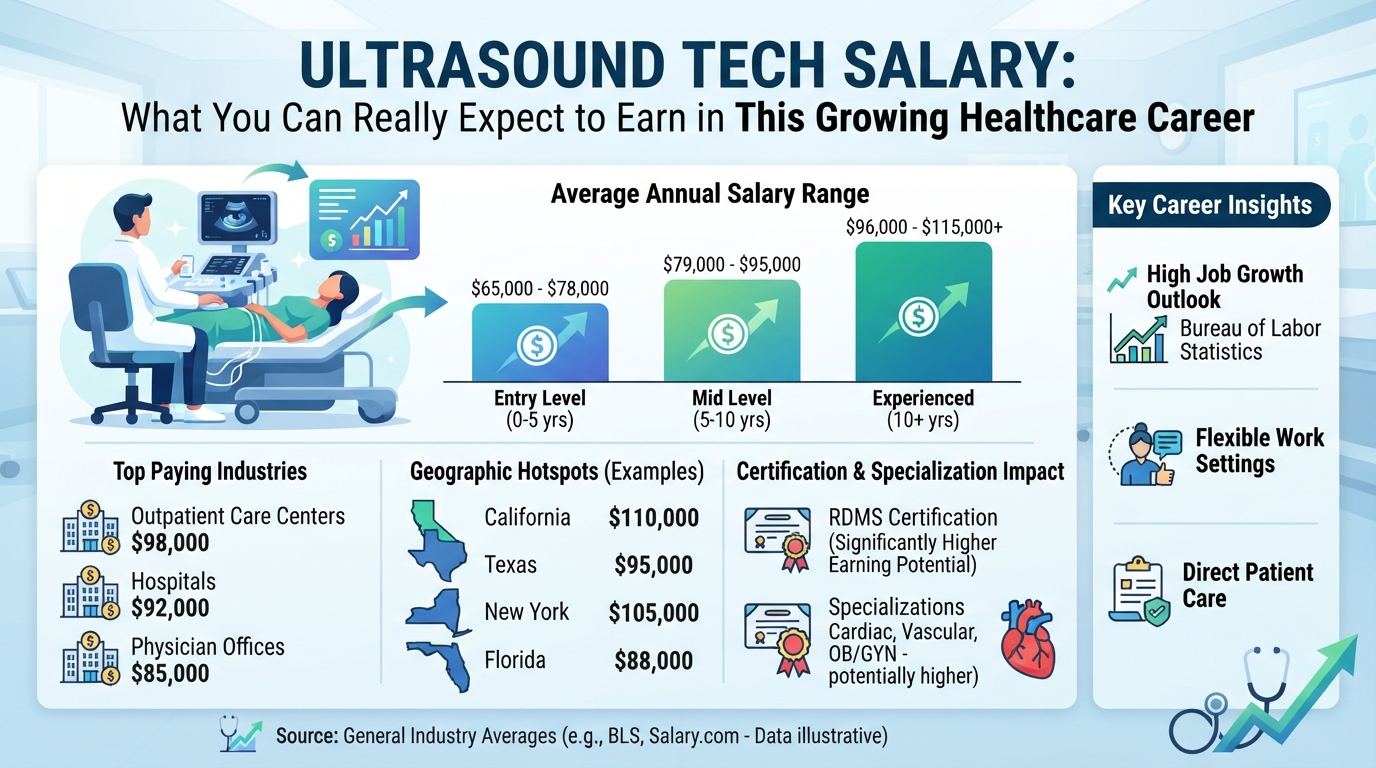
Every career choice begins with a question that goes beyond passion: Will it provide a stable future? For many people exploring healthcare careers, becoming an ultrasound technician seems like the perfect balance of meaningful work, manageable education requirements, and strong earning potential.
Imagine walking into a hospital where your expertise helps doctors detect life-changing medical conditions without surgery or invasive procedures. Every scan you perform contributes to diagnoses that shape patient care. Alongside this rewarding responsibility comes another important consideration—the financial rewards of the profession.
Understanding ultrasound tech salary isn’t as simple as looking at one national average. Income varies based on experience, location, specialization, workplace, certifications, and even work schedule. Looking at the bigger picture reveals why this profession continues to attract new healthcare professionals year after year.
Understanding the Role of an Ultrasound Technician
Ultrasound technicians, also known as diagnostic medical sonographers, use specialized imaging equipment to create detailed pictures of organs, tissues, blood vessels, and developing babies. Physicians rely on these images to diagnose illnesses, monitor pregnancies, and evaluate injuries.
Unlike many healthcare careers that require years of medical school, sonographers typically complete an accredited associate or bachelor’s degree program followed by professional certification. This relatively shorter educational pathway makes the career appealing to people seeking a faster entry into the medical field.
The combination of technical expertise, patient interaction, and continuous learning makes sonography both intellectually engaging and professionally rewarding.
Average Ultrasound Tech Salary
One of the strongest attractions of this profession is its competitive compensation.
Although earnings differ across employers and regions, the national salary picture remains encouraging.
| Experience Level | Average Annual Salary | Average Hourly Wage |
|---|---|---|
| Entry-Level | $60,000–$70,000 | $29–34 |
| Mid-Career | $75,000–$90,000 | $36–43 |
| Experienced | $90,000–$110,000+ | $43–53 |
| Highly Specialized | $110,000–$130,000+ | $53–62 |
These figures can increase further through overtime, shift differentials, travel assignments, or leadership positions.
What Factors Affect Ultrasound Tech Salary?
Several variables influence how much an ultrasound technician earns throughout their career.
Experience Makes a Significant Difference
Like most healthcare professions, experience has a major impact on earnings.
A newly certified sonographer typically starts with a competitive salary compared to many entry-level careers. As years of clinical expertise accumulate, professionals become more efficient, confident, and capable of handling complex examinations.
Hospitals often reward experienced staff with higher wages because their expertise contributes directly to patient outcomes and departmental efficiency.
Geographic Location Matters
Healthcare salaries often reflect the local cost of living and workforce demand.
States with higher living costs frequently offer larger salaries, while rural areas may increase compensation to attract qualified professionals where shortages exist.
Large metropolitan hospitals usually pay more than smaller healthcare facilities, although the difference may be balanced by living expenses.
Professionals willing to relocate often discover opportunities for substantial salary increases.
Workplace Influences Income
Not every ultrasound technician works in the same environment.
Common employers include:
- Hospitals
- Outpatient imaging centers
- Physician offices
- Women’s health clinics
- Emergency care facilities
- Mobile imaging companies
Hospital positions frequently offer the highest earning potential because they require availability during evenings, weekends, holidays, and emergency situations. These additional responsibilities often come with shift differentials and overtime opportunities.
Private clinics may offer slightly lower salaries but compensate with predictable schedules and improved work-life balance.
Specialization Can Increase Earnings
One of the biggest salary advantages comes from specialization.
Instead of performing only general abdominal scans, experienced sonographers often pursue advanced certifications in areas such as:
- Cardiac sonography
- Vascular sonography
- Pediatric sonography
- Musculoskeletal imaging
- Breast sonography
These specialized skills require additional education and clinical expertise but often command higher salaries due to increased demand and technical complexity.
Certification and Education Affect Long-Term Income
Employers increasingly prefer certified professionals.
Holding respected credentials demonstrates competence and commitment to professional standards, making candidates more competitive during hiring and salary negotiations.
Continuing education also plays an important role throughout a career. Healthcare technology evolves rapidly, and professionals who stay current with new imaging techniques often qualify for promotions and expanded responsibilities.
Investing in lifelong learning generally produces financial returns over time.
Overtime and Additional Income Opportunities
Many ultrasound technicians earn considerably more than their base salary.
Healthcare facilities operate around the clock, creating opportunities for additional income through:
- Night shifts
- Weekend shifts
- Holiday coverage
- On-call responsibilities
- Overtime hours
Travel sonography has also become increasingly popular. Temporary assignments in areas experiencing staffing shortages often include premium pay, housing assistance, and travel reimbursement.
For professionals seeking maximum earning potential, travel contracts can significantly increase annual income.
Career Growth Beyond Clinical Practice
Salary growth isn’t limited to performing patient scans.
Experienced sonographers often advance into positions such as department supervisors, imaging managers, clinical instructors, applications specialists, or healthcare consultants.
Some professionals transition into equipment sales, where their clinical knowledge becomes valuable in helping hospitals select imaging systems.
Teaching future sonographers at colleges and training institutions also offers another fulfilling career path while maintaining a connection to the profession.
These advancement opportunities can lead to salaries that exceed traditional clinical roles.
Is the Salary Worth the Education Investment?
Compared with many healthcare careers, becoming an ultrasound technician offers a favorable return on investment.
Training programs are generally shorter than those required for physicians, pharmacists, or physical therapists. Graduates can begin earning professional salaries sooner while often carrying less educational debt.
This combination of lower educational costs and competitive earnings makes sonography an attractive career for recent high school graduates as well as adults considering a career change.
When evaluating lifetime earnings against education expenses, many financial experts consider diagnostic medical sonography one of the more practical healthcare professions.
Job Outlook Supports Future Salary Growth
Strong salaries become even more valuable when paired with excellent employment prospects.
Demand for diagnostic imaging continues to rise as healthcare providers increasingly rely on non-invasive technologies to diagnose medical conditions.
An aging population contributes to greater demand for cardiovascular imaging, vascular examinations, and abdominal diagnostic procedures. Advances in medical technology also continue expanding the role of ultrasound in patient care.
Because of these trends, qualified sonographers are expected to remain highly sought after across hospitals, specialty clinics, and outpatient diagnostic centers.
Steady demand often strengthens salary growth over time as employers compete to attract experienced professionals.
Skills That Can Increase Your Earnings
Technical knowledge is only part of becoming a high-earning ultrasound technician.
Professionals who consistently receive promotions often demonstrate strong communication skills, attention to detail, adaptability, and compassion toward patients. Working efficiently while maintaining image quality also makes sonographers highly valuable in busy clinical environments.
Leadership abilities become increasingly important for those interested in supervisory or management positions. Mentoring new employees, improving workflow, and collaborating effectively with physicians can all contribute to career advancement.
Soft skills, combined with technical expertise, often distinguish exceptional professionals from average performers.
Is Ultrasound Technology the Right Career for You?
Salary should never be the only deciding factor when choosing a profession, but it remains an important one.
Ultrasound technology offers a unique combination of financial stability, meaningful patient interaction, relatively short educational pathways, and long-term career growth. Few careers provide the opportunity to make a direct impact on people’s health while enjoying competitive compensation and strong employment demand.
Those who enjoy science, technology, problem-solving, and helping others often find the profession both personally satisfying and financially rewarding.
As healthcare continues evolving, ultrasound technicians will remain essential members of diagnostic teams, making this career one with lasting relevance.
Conclusion
Choosing a healthcare career is about balancing purpose with practicality, and ultrasound technology achieves that balance remarkably well. While the exact ultrasound tech salary depends on experience, specialization, geographic location, and employer, the profession consistently offers competitive earnings alongside excellent job security.
For individuals seeking a career that combines advanced technology, patient care, and continuous professional growth, diagnostic medical sonography stands out as an appealing option. As demand for medical imaging continues to expand, those entering the field today are likely to benefit from both strong employment opportunities and increasing earning potential in the years ahead.