
 By admin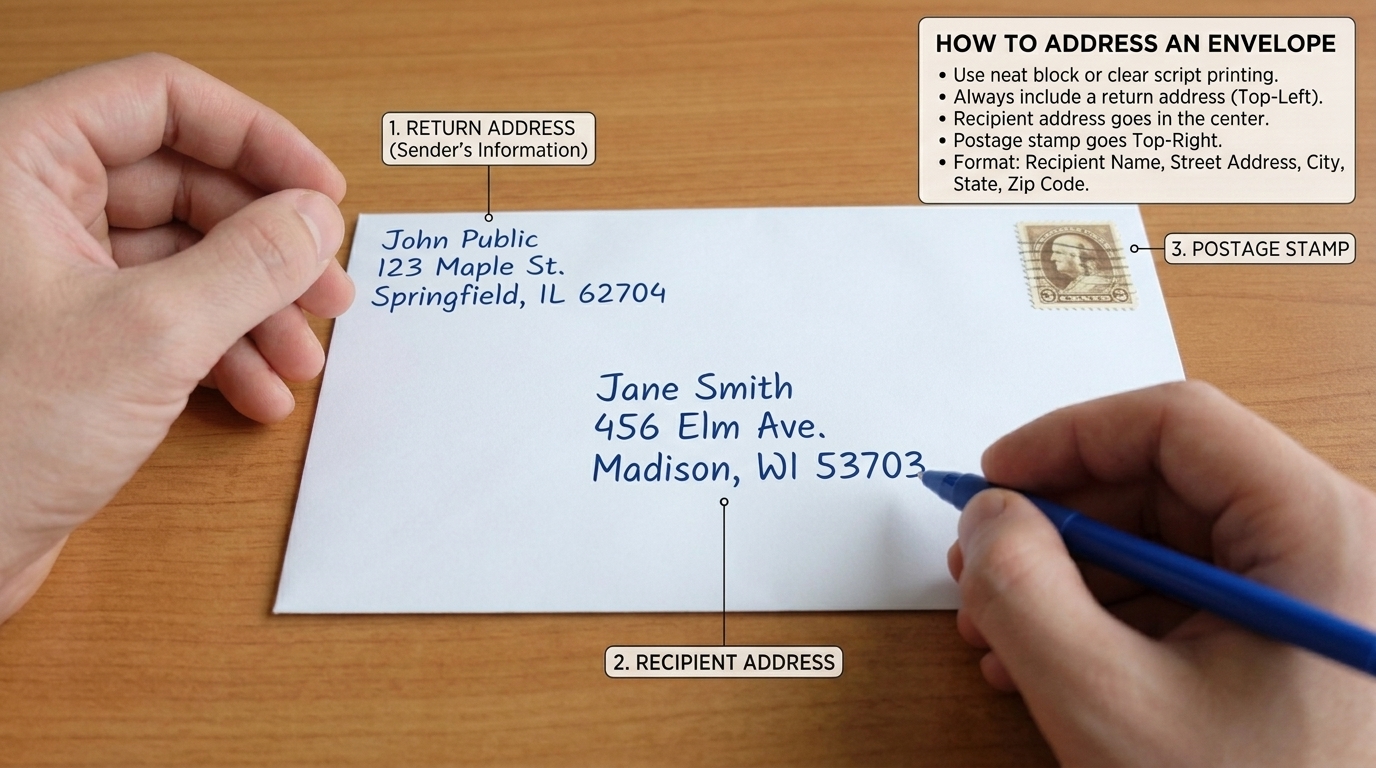
A handwritten envelope carries a certain weight that no email notification can replicate. Whether it’s a wedding invitation, a condolence card, a business letter, or a handwritten note to a distant friend, the moment someone sees their name carefully written across an envelope, the message already feels personal. Yet despite living in an age dominated by instant messaging and cloud-based communication, many people still pause when faced with a blank envelope and wonder exactly how to address it correctly.
That uncertainty is understandable. Addressing an envelope seems simple until details emerge. Should the apartment number go on the same line? Where does the return address belong? How do you address a married couple, a business executive, or an international recipient? Small formatting mistakes can delay delivery or create an unintended impression, especially in professional settings.
Understanding how to address an envelope properly is more than a matter of etiquette. It reflects clarity, professionalism, and attention to detail. In business, it can shape first impressions. In personal correspondence, it signals care and respect. And in practical terms, it ensures your mail actually reaches its destination without confusion.
Why Proper Envelope Addressing Still Matters
Even in highly digitized industries, physical mail remains important. Contracts, legal notices, invitations, tax documents, and handwritten correspondence continue to move through postal systems every day. Companies still rely on direct mail marketing because physical mail often receives more attention than digital ads buried inside crowded inboxes.
For individuals, handwritten communication has become increasingly meaningful precisely because it is rare. A birthday card feels more intimate than a text message. A handwritten thank-you note stands out in a professional environment where most interactions happen through screens.
Postal systems are also highly automated. Sorting machines read addresses rapidly, and standardized formatting helps ensure efficient delivery. A poorly written or incorrectly structured address increases the chances of delays, rerouting, or returned mail. Knowing how to address an envelope correctly helps both the sender and the recipient avoid unnecessary complications.
The Basic Anatomy of an Envelope
At its core, an envelope contains three essential components: the recipient’s address, the return address, and postage.
The recipient’s address appears in the center of the envelope. This is the most important section because postal services use it to route the letter to its final destination.
The return address sits in the upper-left corner. If the mail cannot be delivered, postal workers use this information to return it to the sender.
Postage, whether stamps or printed labels, belongs in the upper-right corner. Without sufficient postage, the envelope may never reach its destination.
The arrangement may seem minor, but consistency matters. Postal systems worldwide rely on these conventions for efficient processing.
How to Address an Envelope Correctly
The most widely accepted format follows a simple structure:
| Envelope Section | Placement | Example |
|---|---|---|
| Return Address | Upper-left corner | Sarah Ahmed, 123 Clifton Road |
| Recipient Name | Center of envelope | Mr. Daniel Harris |
| Street Address | Below recipient name | 456 Maple Avenue, Apt 9 |
| City, State, ZIP Code | Final address line | Austin, TX 78701 |
| Postage | Upper-right corner | Stamp or postage label |
This structure applies to most standard letters within the United States and many other countries with slight regional variations.
A professionally addressed envelope typically looks like this:
Mr. Daniel Harris
456 Maple Avenue, Apt 9
Austin, TX 78701
The writing should remain clear, evenly spaced, and easy to read. Black or blue ink is preferred because it scans well in automated systems.
Addressing Personal Mail
Personal correspondence allows for some flexibility, but clarity should always come first.
When mailing to a close friend or family member, many people use first names only. While that works for casual communication, full names reduce the possibility of confusion, especially in apartment buildings or shared residences.
For married couples, traditional etiquette often uses “Mr. and Mrs.” followed by the husband’s full name. Modern conventions, however, increasingly favor using both first names equally, such as “Emily and James Carter.” This approach feels more contemporary and inclusive.
If you are sending mail to someone with a professional title, using it demonstrates respect. Doctors, professors, military officers, and elected officials are commonly addressed by their formal titles in written correspondence.
For example:
Dr. Maria Thompson
Professor Daniel Lee
Captain Robert Hayes
Professional accuracy matters because titles often carry cultural and social significance.
Business Envelope Etiquette
In professional settings, addressing an envelope becomes part of brand perception. A poorly formatted business letter can appear careless before the recipient even opens it.
Business correspondence typically includes the recipient’s full name, title, company name, and mailing address. The order matters because organizations often route incoming mail internally.
For example:
Ms. Olivia Bennett
Marketing Director
Brightstone Media Group
890 Riverfront Plaza
Chicago, IL 60611
Notice the structure moves from the individual to the organization and then to the physical location.
When sending formal corporate mail, avoid decorative handwriting or overly casual language on the envelope. Clean formatting projects professionalism and credibility.
Apartment Numbers, Suites, and Unit Details
One of the most common mistakes people make when learning how to address an envelope involves incomplete address information. Apartment numbers, office suites, and unit identifiers are essential.
Without them, mail may arrive at the correct building but fail to reach the intended recipient.
The unit number usually appears on the same line as the street address:
742 Evergreen Terrace, Apt 5B
Or:
900 Market Street, Suite 210
Abbreviations like “Apt,” “Ste,” and “Unit” are widely recognized and accepted by postal services.
International Mail Requires Extra Attention
International mailing introduces additional formatting considerations because every country follows slightly different postal conventions.
In most cases, the destination country should appear in capital letters on the final line of the address:
LONDON SW1A 1AA
UNITED KINGDOM
When mailing internationally, it is also wise to verify postal codes and country-specific formatting through the destination country’s postal authority. Some countries place postal codes before city names, while others use entirely different structures.
Writing the country name clearly in English helps international sorting systems process the envelope efficiently.
Handwritten vs. Printed Addresses
Handwritten envelopes create warmth and personality, especially for invitations and greeting cards. However, readability remains critical. Overly decorative cursive or crowded lettering can confuse automated scanners.
Printed labels, meanwhile, offer precision and consistency. Businesses frequently use printed envelopes because they appear polished and reduce human error.
Neither option is inherently superior. The best choice depends on context. Wedding invitations may benefit from elegant handwriting, while legal or corporate correspondence often looks stronger with professional printing.
Common Mistakes That Delay Mail
Many envelope-related issues stem from surprisingly small mistakes.
Incorrect ZIP codes are among the most common. Even a single digit error can redirect mail hundreds of miles away from its destination.
Another frequent problem involves missing directional indicators such as “North,” “South,” or “West.” Cities often contain multiple streets with similar names, and directional details help avoid confusion.
Illegible handwriting also remains a major issue. If postal workers or sorting machines cannot interpret the address quickly, delivery slows down significantly.
Some people also forget return addresses entirely. Without one, undeliverable mail cannot be returned.
Understanding these small but critical details dramatically improves mailing reliability.
The Role of Envelope Presentation
An envelope silently communicates tone before the message inside is ever read.
A clean, neatly addressed envelope conveys professionalism and care. Smudged ink, crooked labels, or cluttered writing may unintentionally suggest haste or disorganization.
This is particularly important for event invitations, client outreach, or job-related communication. Presentation shapes expectations.
Color and design also influence perception. White or cream envelopes remain standard for professional mail because they appear formal and easy to process. Brightly colored or textured envelopes may attract attention but occasionally interfere with postal scanning equipment.
Balancing creativity with readability is often the smartest approach.
Digital Habits Have Changed the Skill
Many younger professionals rarely interact with physical mail until major life events arise. Renting apartments, mailing legal paperwork, sending wedding invitations, or handling government documentation often become moments of sudden realization: basic mailing etiquette still matters.
As digital communication accelerated, practical mailing skills quietly became less common. Yet postal systems remain deeply integrated into everyday infrastructure.
Ironically, this decline in familiarity has made handwritten communication more memorable. Receiving a carefully addressed letter now feels intentional in a way that digital communication rarely does.
That emotional impact explains why handwritten notes continue to hold value in both personal and professional relationships.
Addressing Envelopes with Confidence
Once understood, the process becomes remarkably straightforward. The key lies in consistency, clarity, and completeness.
Every properly addressed envelope follows the same basic principle: guide the letter from sender to recipient as clearly as possible. Names should be accurate, addresses complete, formatting clean, and handwriting readable.
Whether mailing a heartfelt note to a friend, a formal business proposal, or an international package, these small details influence how smoothly communication travels through the world.
Conclusion
Learning how to address an envelope may seem like a minor life skill, but it sits at the intersection of communication, professionalism, and human connection. In an era where most conversations disappear into digital streams within seconds, physical mail still carries permanence and intention.
A thoughtfully addressed envelope does more than deliver paper. It conveys respect for the recipient, attention to detail, and an understanding that presentation matters. That is why this simple practice continues to endure despite changing technology.
The next time you hold a blank envelope in your hands, you are not just preparing mail for delivery. You are participating in a tradition of communication that remains surprisingly powerful in the modern world.