
 By admin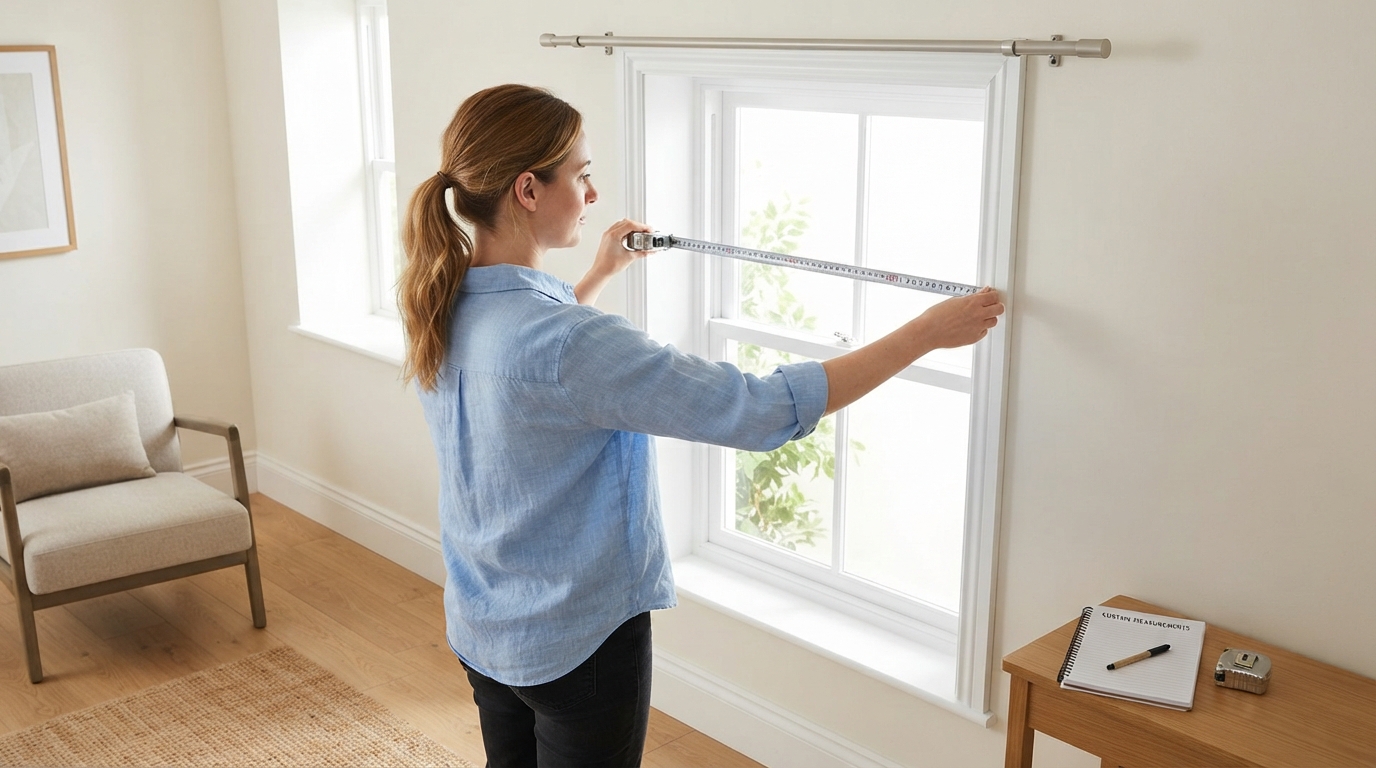
It’s often the finishing touches that transform a house into a home. Fresh paint, carefully chosen furniture, and thoughtful décor all play their part, but few elements influence the look and feel of a room quite like curtains. They soften natural light, add warmth, create privacy, and frame a window in a way that can completely change the character of a space. Yet even the most beautiful fabric can disappoint if the measurements are wrong.
Learning how to measure for curtains is one of the most important steps in any decorating project. Curtains that are too short can make ceilings appear lower, while panels that are too narrow often leave windows looking unfinished. On the other hand, properly measured curtains create balance, elegance, and the illusion of larger, brighter rooms.
Fortunately, measuring for curtains isn’t complicated. With a measuring tape, a clear understanding of your design goals, and a few professional techniques, you can choose curtains that fit beautifully and enhance your home’s overall style. Whether you’re furnishing a new house, replacing outdated window treatments, or ordering custom-made curtains, accurate measurements provide the foundation for outstanding results.
Why Accurate Curtain Measurements Matter
Before exploring how to measure for curtains, it’s worth understanding why precision makes such a difference.
Curtains serve both practical and decorative purposes. They control sunlight, improve privacy, help regulate indoor temperatures, and contribute significantly to a room’s visual appeal. Because they occupy a large vertical space, even small measuring errors become noticeable once the curtains are installed.
Proper measurements ensure the fabric hangs naturally, opens and closes smoothly, and complements the proportions of the window and surrounding walls.
Accurate sizing also helps avoid unnecessary alterations or costly replacements, particularly when purchasing custom curtains that cannot easily be returned.
Taking a few extra minutes to measure carefully often saves considerable time, expense, and frustration later.
Decide Where the Curtain Rod Will Be Installed
One of the biggest misconceptions is that curtain measurements begin with the window itself.
In reality, they usually begin with the curtain rod.
Professional interior designers often mount curtain rods several inches above the window frame rather than directly on top of it. Installing the rod higher creates the illusion of taller ceilings, while extending the rod beyond the window frame allows curtains to stack neatly to the sides without blocking natural light.
If the rod has not yet been installed, determine its intended position before taking any measurements.
This approach ensures your curtain dimensions match the final installation rather than the window opening alone.
Measuring Curtain Width
The first essential dimension is width.
Rather than measuring only the glass portion of the window, measure the full width of the installed or planned curtain rod from end to end, excluding decorative finials unless the curtains will cover them.
For a full, luxurious appearance, curtain fabric should generally measure between one and a half to three times the width of the rod, depending on the desired fullness and fabric weight.
Lightweight fabrics often benefit from additional fullness because they drape softly, while heavier materials naturally create a fuller appearance with less extra fabric.
The goal is to create graceful folds rather than a flat, stretched look.
How to Measure Curtain Length
Understanding how to measure for curtains also requires choosing the right curtain length.
Start measuring from the top of the curtain rod or the curtain rings, depending on how the curtains will hang.
Continue measuring downward to your preferred finishing point.
Some homeowners prefer curtains that end just above the floor for a clean, modern appearance. Others choose curtains that gently touch the floor, creating a classic tailored look.
For more formal interiors, puddled curtains intentionally extend several inches onto the floor, producing a luxurious, dramatic effect.
Consistency across all windows within the same room helps create a cohesive appearance.
Standard Curtain Length Styles
The desired style significantly influences curtain length.
| Curtain Style | Ending Position | Best Suited For |
|---|---|---|
| Sill Length | Ends at the window sill | Kitchens, bathrooms, small windows |
| Apron Length | Ends just below the window sill | Casual living spaces |
| Floor Length | Ends just above the floor | Modern and contemporary rooms |
| Break Length | Lightly touches the floor | Traditional interiors |
| Puddle Length | Extends several inches onto the floor | Formal dining rooms, bedrooms, luxury spaces |
Choosing the appropriate style depends on both aesthetics and practicality.
Homes with pets or robotic vacuum cleaners often benefit from floor-length curtains that avoid excessive fabric pooling.
Measuring Different Window Types
Not every window follows standard dimensions.
Bay windows require separate measurements for each section because every angle influences curtain placement.
Corner windows may require individual rods or specially designed corner hardware.
French doors often use narrower curtain panels designed specifically for door operation.
Large picture windows benefit from wider curtain rods that allow fabric to stack outside the glass area, maximizing natural light when curtains are open.
Carefully evaluating each window’s shape ensures measurements reflect its unique characteristics.
Consider Curtain Heading Styles
Different curtain headings affect overall finished length.
Eyelet or grommet curtains hang directly from the rod, so measurements typically begin at the top of the rod itself.
Pencil pleat curtains attach using hooks positioned slightly below the rod, requiring minor measurement adjustments.
Pinch pleat curtains create elegant folds that slightly alter finished length depending on hook placement.
Wave curtains produce smooth, contemporary folds and often require specialized tracks with manufacturer-specific measuring instructions.
Understanding your chosen heading style before ordering prevents unexpected sizing differences.
Common Measuring Mistakes to Avoid
Even experienced homeowners occasionally make avoidable measurement errors.
One of the most common mistakes is measuring only the window frame instead of the planned curtain rod width.
Another involves forgetting to account for mounting hardware such as rings or hooks, which affect overall curtain length.
Some people round measurements too aggressively. Recording exact dimensions allows manufacturers or retailers to recommend the most suitable curtain size.
Ignoring floor irregularities can also cause problems. Older homes sometimes have uneven floors, making it worthwhile to measure from multiple points before finalizing curtain length.
Finally, always measure twice before placing an order, especially for custom-made curtains.
A few extra minutes spent verifying measurements can prevent expensive mistakes.
Custom Curtains vs. Ready-Made Panels
Your measurements also influence whether ready-made or custom curtains are the better choice.
Ready-made curtains offer convenience, affordability, and immediate availability. Standard sizes work well for many homes with typical window dimensions.
Custom curtains provide greater flexibility for unusual window sizes, premium fabrics, unique heading styles, and personalized design preferences.
Although custom options involve higher costs, they often deliver a more tailored appearance, especially in formal living rooms, dining rooms, or luxury interiors.
Accurate measurements become even more important when ordering bespoke window treatments.
Professional Tips for Better Results
Interior designers often rely on a few simple techniques to maximize visual impact.
Mounting curtain rods closer to the ceiling than the window frame creates the illusion of greater room height.
Extending rods beyond each side of the window makes windows appear wider while allowing more natural light to enter when curtains are open.
Selecting generous fabric fullness enhances elegance and creates richer folds.
Matching curtain lengths throughout open-concept living spaces contributes to visual harmony.
Most importantly, avoid rushing the measuring process. Careful planning almost always produces superior results.
Why Learning How to Measure for Curtains Is Worth It
Knowing how to measure for curtains empowers homeowners to make confident decorating decisions.
Rather than relying solely on standard sizes or guessing dimensions, accurate measurements ensure window treatments fit beautifully from the moment they’re installed.
Well-fitted curtains improve aesthetics while enhancing energy efficiency, privacy, light control, and overall comfort.
They also protect your investment by reducing the likelihood of returns, alterations, or replacement purchases.
Whether you’re decorating a single bedroom or furnishing an entire home, this practical skill provides lasting value every time you update your windows.
Conclusion
Learning how to measure for curtains is one of the simplest yet most important steps in creating beautiful, well-balanced interiors. By measuring carefully, considering rod placement, selecting appropriate fullness, and choosing the right length, you can achieve professional-looking results regardless of your decorating style.
The difference between average curtains and exceptional window treatments often comes down to precision. A few thoughtful measurements can transform ordinary fabric into a design feature that enhances the entire room.
As home design continues to emphasize comfort, functionality, and personal expression, properly measured curtains remain one of the most effective ways to elevate any living space. With patience, careful planning, and attention to detail, your windows can become a defining feature of your home rather than an afterthought.