
 By admin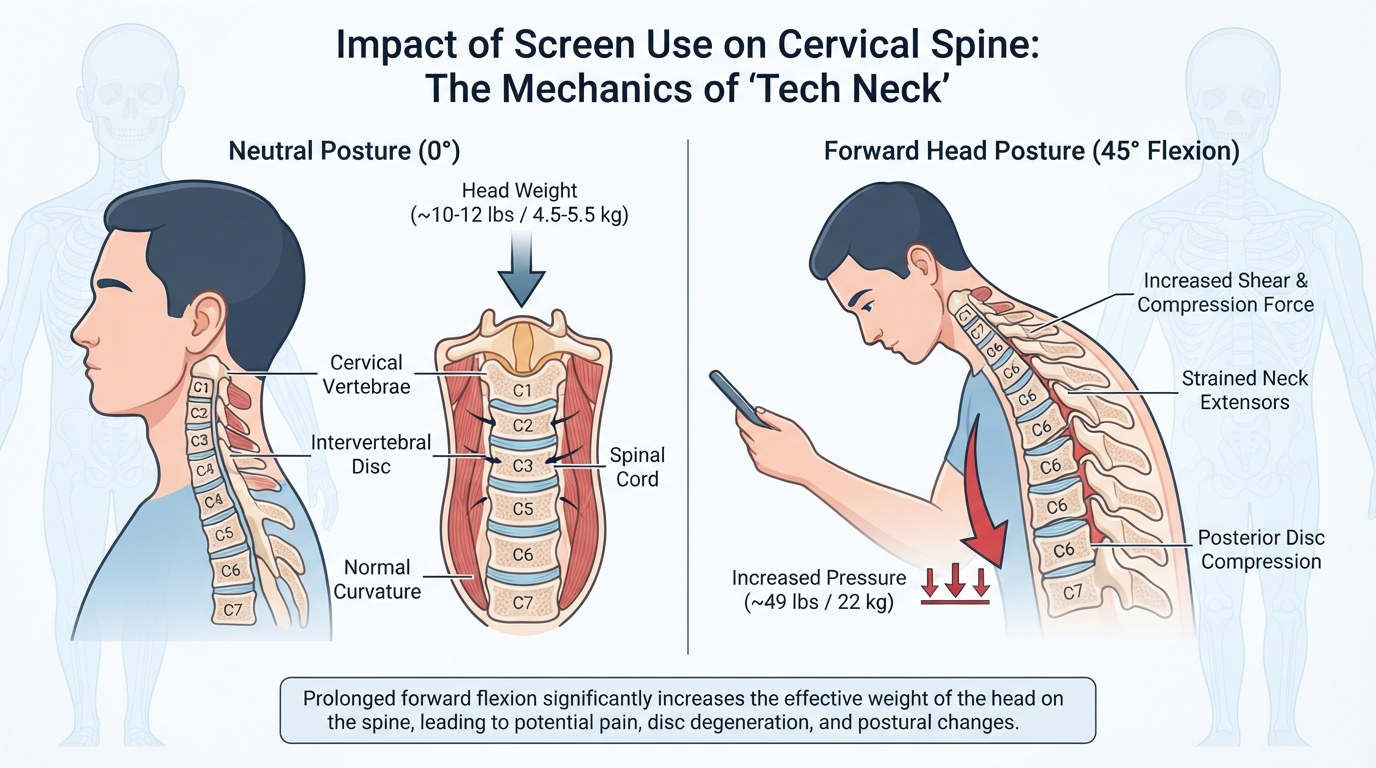
It often begins as a subtle ache that appears near the end of a busy day. After hours spent replying to emails, attending video meetings, scrolling through social media, or reading messages on a smartphone, your neck feels unusually stiff. Rolling your shoulders offers temporary relief, but by the next morning, the discomfort returns. For millions of people, this daily routine has become so common that it feels almost inevitable. Yet what many dismiss as ordinary soreness has a name that reflects our increasingly digital lives: tech neck.
As screens have become central to work, education, and entertainment, prolonged forward head posture has emerged as one of the most widespread musculoskeletal concerns of the modern era. Whether you’re working at a desk, studying on a laptop, or spending hours on your phone, the position of your head and neck can place repeated stress on muscles, joints, and ligaments. Over time, those small daily habits may contribute to persistent discomfort, reduced mobility, and changes in posture.
Understanding what tech neck is, why it develops, and how to address it can help you build healthier habits that protect your body without giving up the technology you rely on every day.
What Is Tech Neck?
Tech neck is an informal term used to describe neck pain, stiffness, and related discomfort associated with prolonged forward head posture while using digital devices. It commonly develops when people repeatedly tilt their heads downward to look at smartphones, tablets, laptops, or poorly positioned computer monitors.
The human head weighs roughly 10 to 12 pounds in a neutral position. As the head tilts forward, the effective load placed on the cervical spine increases significantly. This added strain requires the muscles of the neck, shoulders, and upper back to work harder to support the head.
Although the body is remarkably adaptable, maintaining this position for extended periods day after day can contribute to muscle fatigue, joint irritation, and postural imbalance.
Why Modern Lifestyles Contribute to the Problem
Technology itself is not the cause of neck pain. Rather, it’s the way many people use technology that creates the issue.
Today’s work environments often require prolonged computer use, while leisure time frequently involves smartphones, streaming services, gaming, or tablets. Unlike previous generations, many people now spend most of their waking hours interacting with screens.
Remote work has further blurred the boundary between professional and personal screen time. Dining tables, couches, and beds often replace ergonomically designed workstations, encouraging poor posture throughout the day.
Without regular movement or proper workstation setup, these habits can gradually place unnecessary stress on the spine.
Common Symptoms
The effects of tech neck vary from person to person, but several symptoms appear frequently.
| Symptom | Possible Explanation |
|---|---|
| Neck stiffness | Muscle fatigue from prolonged forward posture |
| Shoulder pain | Increased tension in supporting muscles |
| Upper back discomfort | Poor spinal alignment |
| Headaches | Muscle tension extending into the scalp |
| Reduced neck mobility | Joint stiffness and muscle tightness |
| Tingling in arms (occasionally) | Possible nerve irritation requiring evaluation |
Symptoms often worsen after extended screen use and improve with movement or changes in posture.
How Poor Posture Affects the Body
The neck rarely functions in isolation. Every part of the spine works together to support balance and movement.
When the head moves forward, the shoulders often round inward while the upper back becomes more curved. This chain reaction alters muscle activity throughout the upper body. Some muscles become chronically tight, while others gradually weaken from underuse.
Over time, these imbalances may affect breathing mechanics, shoulder mobility, and overall posture. Although occasional poor posture is unlikely to cause lasting problems, consistently maintaining awkward positions can contribute to ongoing discomfort.
The body adapts remarkably well—but it also adapts to unhealthy habits if they’re repeated often enough.
Recognizing Early Warning Signs
One of the challenges with tech neck is that it usually develops gradually.
Rather than appearing suddenly, discomfort often starts as mild tightness after a long day. As screen habits continue unchanged, that temporary soreness may become more frequent or linger longer.
People sometimes notice they instinctively rub the back of their neck, stretch their shoulders throughout the day, or experience stiffness when turning their head while driving.
Recognizing these early signals provides an opportunity to adjust habits before discomfort becomes more persistent.
Improving Your Workstation
A thoughtfully arranged workspace can dramatically reduce unnecessary strain.
Your computer monitor should sit at approximately eye level, allowing you to look straight ahead rather than downward. The keyboard and mouse should be positioned so your elbows remain close to your body and your shoulders stay relaxed.
A supportive chair encourages your feet to rest flat on the floor while maintaining the natural curve of your lower back.
Laptop users often benefit from raising the screen with a stand while using an external keyboard and mouse. This simple adjustment helps maintain a more neutral head position during extended work sessions.
Small ergonomic improvements often have a cumulative effect over weeks and months.
Healthy Smartphone Habits
Smartphones present a unique challenge because they naturally encourage downward viewing.
Whenever possible, raise your phone closer to eye level instead of lowering your head toward the screen. While this may feel unusual initially, it significantly reduces the angle of neck flexion.
Voice commands, hands-free features, and larger screens can also minimize prolonged downward positioning.
Equally important is limiting continuous phone use. Short breaks throughout the day allow muscles to recover before fatigue accumulates.
Technology doesn’t need to disappear from daily life—it simply benefits from more mindful use.
Exercises That May Help
Regular movement plays an important role in reducing muscle tension associated with prolonged sitting.
Gentle chin tucks encourage awareness of neutral head alignment. Shoulder blade squeezes activate muscles that support upright posture. Neck stretches performed slowly and without force can help maintain flexibility, while chest-opening exercises counteract the rounded shoulders often associated with extended computer use.
General physical activity also contributes to healthier posture by strengthening the muscles that support the spine.
Exercises should remain comfortable and controlled. Sharp pain, numbness, or worsening symptoms should prompt medical evaluation rather than continued stretching.
The Importance of Movement Throughout the Day
Even the most ergonomic workstation cannot eliminate the effects of remaining still for hours.
Human bodies are designed for movement. Standing, walking, and changing positions throughout the day help improve circulation, reduce muscle fatigue, and prevent joints from becoming stiff.
Many health professionals recommend taking brief movement breaks every 30 to 60 minutes. These interruptions need not be lengthy. Walking across the room, stretching gently, or simply standing for a few minutes can provide meaningful relief.
Consistency matters more than intensity.
When to Seek Medical Advice
Most mild cases of neck discomfort improve with posture adjustments, movement, and time.
However, persistent pain lasting several weeks, severe headaches, numbness, tingling, weakness, or pain radiating into the arms may indicate conditions requiring professional evaluation.
Healthcare providers such as primary care physicians, physical therapists, or orthopedic specialists can assess whether symptoms stem from muscle strain or another underlying condition.
Early assessment often allows more targeted treatment and may prevent symptoms from progressing.
Preventing Tech Neck in Everyday Life
Long-term prevention depends on building sustainable habits rather than relying on occasional corrections.
Paying attention to posture while working, adjusting screen height, taking regular movement breaks, exercising consistently, and avoiding prolonged periods of looking downward all contribute to healthier spinal mechanics.
Good sleep posture also plays a role. Using a supportive pillow that maintains a neutral neck position may help reduce overnight strain.
Most importantly, prevention involves awareness. Once people begin noticing how often they look down at screens, they naturally become more intentional about changing those patterns.
Looking Beyond Neck Pain
Tech neck reflects a broader shift in how people interact with technology.
Digital devices have transformed communication, education, healthcare, and business in extraordinary ways. The goal isn’t to eliminate screen use but to adapt our physical habits to match our technological lives.
As ergonomic research continues to evolve, workplaces and individuals alike are recognizing that productivity and physical well-being are closely connected.
Small adjustments made consistently often prove more effective than dramatic changes attempted briefly.
Conclusion
Tech neck has become one of the defining posture challenges of the digital age, not because technology is harmful, but because prolonged, repetitive positioning places demands on the body it wasn’t designed to sustain indefinitely. The encouraging news is that many of the contributing factors are within our control.
By improving workstation ergonomics, using mobile devices more thoughtfully, incorporating regular movement, and responding early to signs of discomfort, it’s possible to reduce strain and support long-term spinal health. As our reliance on technology continues to grow, maintaining healthy posture isn’t simply about avoiding pain—it’s about ensuring that modern convenience doesn’t come at the expense of everyday well-being.