
 By admin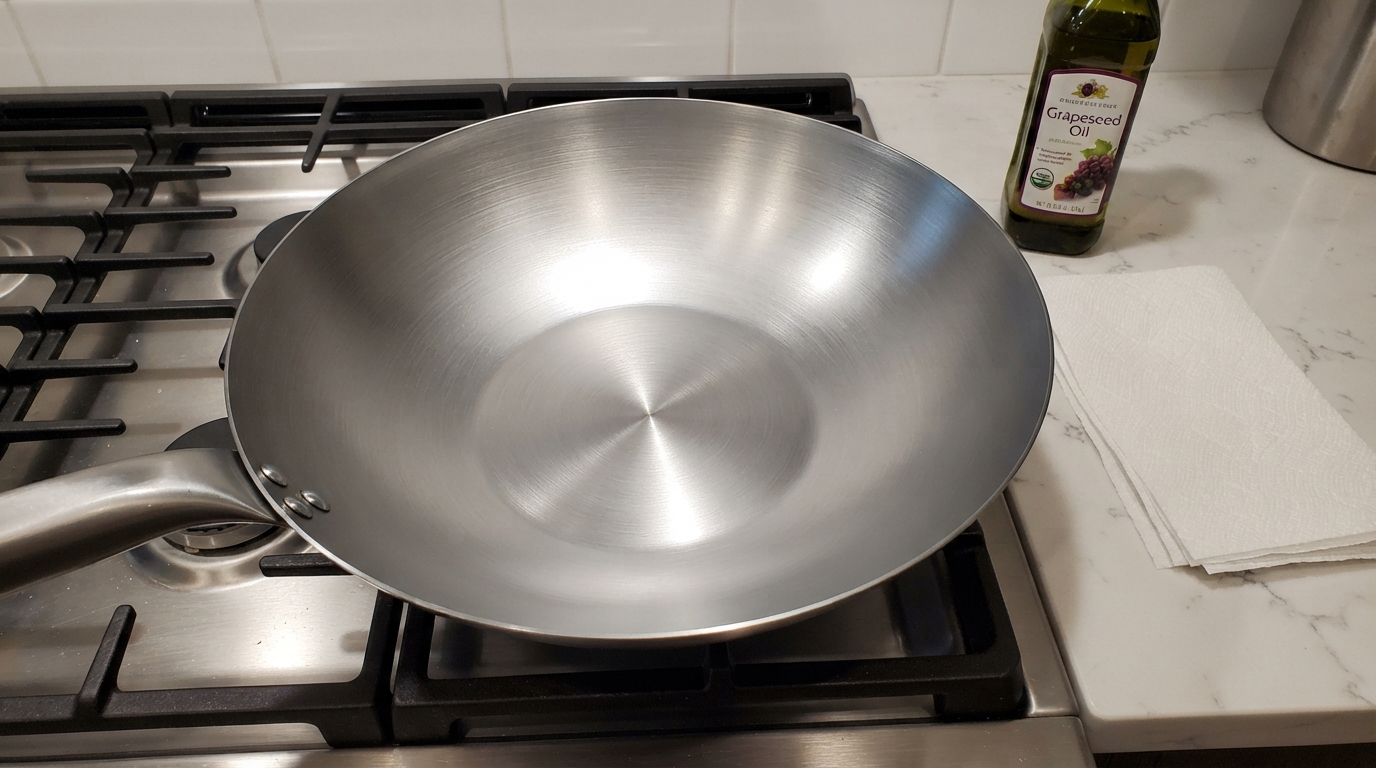
There is a moment every home cook remembers: standing over a brand-new wok, eager to recreate the smoky stir-fries from their favorite restaurant, only to watch ingredients stick stubbornly to the shiny metal. The problem usually isn’t technique or heat—it’s the wok itself. Before a carbon steel wok can deliver the fast, effortless cooking it was designed for, it needs one essential preparation: seasoning.Learning how to season a wok is more than a maintenance task. It’s the process that transforms bare metal into a naturally nonstick cooking surface while protecting it from rust. Unlike factory-coated cookware, a well-seasoned wok improves with every meal, developing a rich, dark patina that reflects years of cooking and care. Professional chefs treasure this finish because it enhances flavor, improves cooking performance, and extends the life of the cookware.
Whether you’ve just unpacked a new carbon steel wok or you’re restoring one that has lost its seasoning, understanding the process will save frustration and help you build a reliable kitchen tool that lasts for decades.
Why Seasoning Matters
Carbon steel is one of the most popular materials for traditional woks because it heats quickly, responds instantly to temperature changes, and develops a naturally slick cooking surface over time. However, it leaves the factory coated with protective oils designed to prevent rust during shipping—not for cooking.
Seasoning removes those coatings and replaces them with layers of polymerized oil. When heated to high temperatures, a thin layer of oil chemically bonds to the steel, creating a protective coating that gradually becomes darker, smoother, and more nonstick.
This finish offers several practical benefits. Food releases more easily, cleanup becomes simpler, rust is prevented, and the wok develops the unique cooking characteristics associated with authentic stir-frying.
What You’ll Need Before You Begin
The process is surprisingly simple, requiring only a few household items.
| Item | Purpose |
|---|---|
| Carbon steel wok | The cookware being seasoned |
| Dish soap | Removes factory oils |
| Scrubbing sponge | Cleans the surface thoroughly |
| High smoke-point oil | Creates the seasoning layer |
| Paper towels | Applies a thin coat of oil |
| Stove or outdoor burner | Provides high heat |
| Tongs | Holds paper towels safely |
Choose oils with high smoke points, such as grapeseed, avocado, peanut, or canola oil. These oils polymerize effectively without burning prematurely.
Step One: Remove the Factory Coating
The first step is the one many people overlook.
New carbon steel woks are coated with manufacturing oils that protect them during storage and transport. These oils must be completely removed before seasoning begins.
Wash the wok with hot water, dish soap, and a scrubbing pad. Unlike cast iron cookware, where soap is often discouraged after seasoning, using soap at this stage is essential. Scrub both the interior and exterior until the surface feels clean rather than oily.
Dry the wok immediately with a towel, then place it over medium heat for several minutes to evaporate every trace of moisture. Carbon steel can begin rusting surprisingly quickly if left wet.
Step Two: Heat the Wok Thoroughly
Heating the bare metal prepares it for its first seasoning layer.
Place the empty wok over high heat. As the temperature rises, the metal may begin changing color. Portions of the steel can turn blue, brown, or even black. This is completely normal and indicates oxidation occurring at high temperatures.
Rotate the wok slowly if using a standard home burner, ensuring every section is exposed to direct heat. Since household burners heat only the center, moving the wok allows the sides to reach the necessary temperature.
Continue heating until the entire cooking surface has changed color.
Step Three: Apply an Extremely Thin Layer of Oil
This is where many first-time users make their biggest mistake.
More oil does not create better seasoning. In fact, thick layers produce sticky patches rather than a smooth finish.
Fold a paper towel, dip it lightly into oil, and wipe the entire cooking surface with an almost invisible coating. If you can see pools or droplets of oil, there’s too much. Wipe away the excess until the metal appears nearly dry.
The goal is an exceptionally thin layer that bonds evenly to the steel.
Step Four: Heat Until the Oil Smokes
Return the oiled wok to high heat.
As the temperature rises, the oil will begin smoking. This smoke signals that polymerization is occurring. Continue heating while rotating the wok so every section reaches smoking temperature.
After several minutes, allow the wok to cool slightly.
You’ll notice that parts of the wok have become darker. This is the beginning of the protective patina.
Step Five: Repeat the Process
A single seasoning layer works, but several thin layers create a much stronger finish.
Repeat the oiling and heating process three to five times. Each layer should remain extremely thin.
With every cycle, the surface will gradually deepen from silver to golden brown and eventually toward dark brown or black. Uneven coloration is perfectly normal, especially during the first few uses.
Perfection isn’t the objective. Performance is.
Strengthening the Seasoning Through Cooking
The seasoning doesn’t end after the initial process.
The best way to build a durable patina is by cooking regularly.
Start with ingredients that contain natural fats, such as onions, scallions, ginger, garlic, mushrooms, or fatty cuts of meat. These foods help reinforce the seasoning while being forgiving for beginners.
Avoid acidic ingredients like tomatoes, vinegar-heavy sauces, or citrus during the first several cooking sessions. Acid can weaken fresh seasoning before it fully develops.
After several weeks of regular use, the wok will become noticeably darker and more naturally nonstick.
Cleaning Without Damaging the Finish
Proper cleaning is just as important as proper seasoning.
After cooking, rinse the wok with hot water while it’s still warm. Use a soft sponge or bamboo brush to remove food residue. If stubborn bits remain, simmer a small amount of water in the wok for a few minutes before gently scrubbing.
Dry the wok immediately over heat.
Once dry, wipe on an almost invisible layer of cooking oil before storing it. This extra protection keeps moisture away and reinforces the developing seasoning.
Soap isn’t automatically harmful to a mature carbon steel wok, but frequent heavy scrubbing with strong detergents can gradually weaken the protective coating. Gentle cleaning preserves the finish far better.
Common Mistakes That Ruin Seasoning
Many seasoning problems come down to a handful of avoidable mistakes.
Applying too much oil is the most common issue. Thick coatings create gummy, sticky surfaces that never harden properly.
Cooking acidic foods too early can strip away fresh seasoning before it becomes durable.
Leaving the wok wet encourages rust, especially around the rim and handle connections.
Using abrasive steel wool after seasoning removes the very coating you’re trying to build.
Finally, expecting an evenly black wok after one seasoning session often leads to unnecessary concern. Professional-looking patinas develop through months—or even years—of cooking.
What to Do If Rust Appears
Finding rust doesn’t necessarily mean the wok is ruined.
Light surface rust can usually be removed with steel wool or a scrubbing pad. Once the rust disappears, wash the wok thoroughly, dry it completely, and repeat the seasoning process from the beginning.
Carbon steel is remarkably forgiving. Even heavily neglected woks can often be restored with patience and proper seasoning.
How Often Should You Season a Wok?
There’s no fixed schedule.
If you cook with your wok several times each week, regular use naturally strengthens the protective layer.
You may want to add an extra seasoning cycle if food begins sticking more than usual, if the surface develops gray patches, or after removing rust.
Otherwise, everyday cooking serves as continuous maintenance.
Signs Your Wok Is Properly Seasoned
A well-seasoned wok won’t necessarily look perfect.
Instead, you’ll notice practical improvements. Food releases more easily, the surface becomes darker over time, cleanup requires minimal effort, and water beads rather than spreads across the metal after heating.
Some areas may remain lighter than others for months. This variation is completely normal and doesn’t affect cooking performance.
The most valuable seasoning isn’t the one that looks beautiful—it’s the one built through consistent use.
Conclusion
Understanding how to season a wok is less about following a rigid set of instructions and more about beginning a long-term relationship with your cookware. Every stir-fry, every handful of vegetables tossed over high heat, and every careful cleaning contributes another layer to the wok’s evolving surface.
Unlike cookware that deteriorates with age, a carbon steel wok rewards regular use. Its character deepens, its cooking performance improves, and its naturally nonstick finish becomes increasingly reliable. The first seasoning session simply lays the foundation. The real transformation happens over countless meals, turning an ordinary piece of steel into one of the most versatile tools in the kitchen.